
21 Ways Construction Projects Quietly Go Over Budget
Learn 21 ways construction projects quietly go over budget—from scope gaps and contractor choices to delays and hidden fees. Get practical steps to control costs, avoid rework, and keep your project on track.
4/8/20265 min read
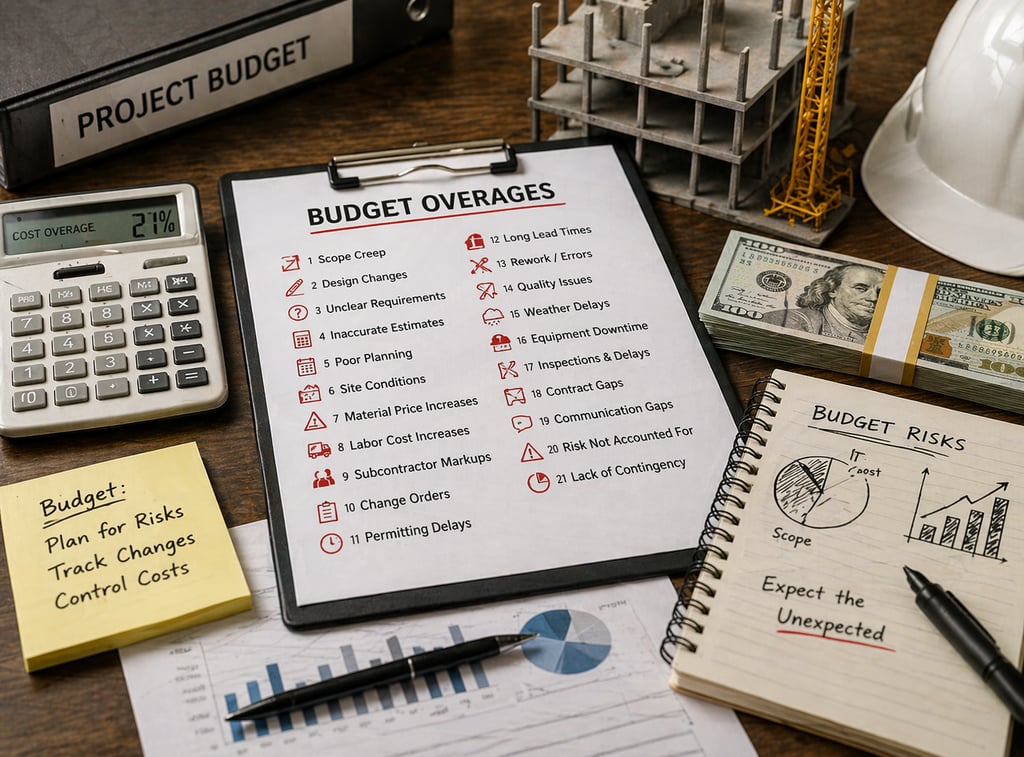
A “$50,000 project” turning into $70,000 isn’t unusual—and it almost never comes from one big mistake.
Costs creep in through small gaps: unclear scope, coordination issues, slow approvals, and decisions made mid-build. If you know where those leaks are, you can catch them early. Here’s where projects quietly go over budget—and what to do instead.
Planning Gaps That Trigger Hidden Costs
1. Starting without a fully defined scope
What it is: Kicking off work without a written, line-by-line scope of what’s included.
Why it matters: Anything not listed becomes a “change” later. That means extra labor, extra materials, and markup.
Do this instead:
List every deliverable (fixtures, finishes, demo, disposal)
Attach drawings and specs to the contract
Ask for a scope that says what’s excluded as well as included
2. Overlooking site conditions
What it is: Not investigating soil, drainage, or existing structural limitations.
Why it matters: Surprises here are expensive—foundation tweaks, grading changes, or moisture mitigation. In areas with clay-heavy soil, expansion and contraction can change how a slab behaves.
Do this instead:
Get a basic site/structure assessment
Ask how drainage will be handled before framing starts
Budget for soil or grading adjustments if the site isn’t ideal
3. Underestimating permit requirements
What it is: Treating permits as quick paperwork.
Why it matters: Missed details trigger re-submissions and stop-work orders. That means idle crews and rescheduling fees.
Do this instead:
Confirm which permits are required in writing
Ask who pulls them and what’s included
Build approval time into your schedule
4. Rushing the design phase
What it is: Locking plans quickly just to “get started.”
Why it matters: Design changes during construction are some of the most expensive changes you can make.
Do this instead:
Finalize layouts, materials, and dimensions up front
Walk through edge cases (clearances, access, maintenance)
Treat design as cost control, not a delay
Contractor and Hiring Decisions That Add Up
5. Choosing based on price alone
What it is: Picking the lowest bid without comparing scope.
Why it matters: Lower bids often exclude work or assume cheaper methods. You’ll pay the difference later.
Do this instead:
Compare line items across bids
Ask what’s assumed vs. guaranteed
Look for gaps, not just totals
6. Hiring a generalist for specialized work
What it is: Using a general contractor for systems that require specific expertise.
Why it matters: Specialized systems (secure hardware, reinforced assemblies, integrated controls) need experience. Trial-and-error shows up as rework.
Do this instead:
Match contractor experience to the system you’re installing
For projects with controlled or secure components, teams often bring in specialists—such as Cornerstone Inc.—because standard crews aren’t set up for that level of detail
Ask for similar projects completed in the last 12–24 months
7. Not verifying past work
What it is: Skipping references and recent project reviews.
Why it matters: Past performance shows how a contractor handles complexity, not just basics.
Do this instead:
Request 2–3 recent jobs similar in scope
Ask about schedule accuracy and change orders
If possible, speak to a previous client
8. Weak communication expectations
What it is: No agreed cadence for updates or decisions.
Why it matters: Small misunderstandings turn into delays and rework.
Do this instead:
Set a weekly check-in (even 15 minutes)
Agree on how changes are approved (email, signed form)
Keep a single thread or doc for decisions
Budgeting Mistakes That Snowball
9. No contingency fund
What it is: Budgeting to the dollar with no buffer.
Why it matters: Unexpected items are normal, not rare. Without a buffer, every surprise becomes a crisis.
Do this instead:
Set aside 10–20% depending on complexity
Keep contingency separate from the main budget
Use it only for true surprises, not upgrades
10. Ignoring small expenses
What it is: Overlooking fees, delivery charges, and disposal.
Why it matters: These add up quietly across weeks.
Do this instead:
Track every expense category
Ask for delivery, haul-off, and equipment fees up front
Review invoices weekly, not at the end
11. Assuming material prices stay stable
What it is: Planning around today’s prices for future purchases.
Why it matters: Materials can fluctuate, especially on longer timelines.
Do this instead:
Lock in pricing where possible
Order long-lead items early
Ask what’s price-protected vs. variable
12. Mid-project upgrades
What it is: Changing finishes or specs after work starts.
Why it matters: Each change touches labor, schedule, and often permits.
Do this instead:
Decide finishes before demo
Approve samples early
Treat upgrades as pre-construction decisions
Timeline Issues That Turn Into Costs
13. Delayed material delivery
What it is: Materials arriving later than scheduled.
Why it matters: Crews wait or move on, which adds labor and remobilization costs.
Do this instead:
Identify long-lead items (windows, specialty hardware)
Order early with confirmed dates
Ask how delays are handled in your contract
14. Poor trade coordination
What it is: Trades scheduled without a clear sequence.
Why it matters: One delay cascades into others—framing affects electrical, which affects drywall.
Do this instead:
Ask for a phase-by-phase schedule
Confirm handoff points between trades
Build buffer between critical steps
15. Weather disruptions
What it is: Not accounting for weather impacts.
Why it matters: Rain, heat, and cold can slow or stop work.
Do this instead:
Plan weather-sensitive tasks for appropriate windows
Ask what work can continue during bad weather
Protect materials stored on site
16. Inspection delays
What it is: Waiting on required inspections to proceed.
Why it matters: Work can’t continue without approvals, which stalls the schedule.
Do this instead:
Schedule inspections in advance where possible
Confirm inspection windows with your contractor
Keep documentation ready to avoid re-inspections
Execution Mistakes That Cost More Later
17. Rework from errors
What it is: Fixing work after it’s been completed.
Why it matters: You pay twice—once to build it, again to fix it.
Do this instead:
Do spot checks at key milestones
Approve critical steps before they’re covered (wiring, framing)
Address issues immediately, not at the end
18. Poor material handling
What it is: Materials damaged on site before use.
Why it matters: Replacements delay the schedule and increase cost.
Do this instead:
Store materials off the ground and covered
Assign responsibility for site organization
Inspect deliveries on arrival
19. Skipping progress checks
What it is: Letting work continue without periodic review.
Why it matters: Small issues become large corrections if left unchecked.
Do this instead:
Walk the site regularly
Keep a punch list during the build, not just at the end
Take photos to document progress
Final Oversights That Add Unexpected Costs
20. Rushing the finish
What it is: Speeding through final stages to “wrap it up.”
Why it matters: Finishes are where details matter most—mistakes here are visible and costly to redo.
Do this instead:
Allocate time for final adjustments
Review finishes in good lighting
Hold back final payment until punch list is complete
21. Poor project documentation
What it is: Not tracking decisions, changes, and approvals.
Why it matters: Without records, disputes are harder to resolve and costs are harder to control.
Do this instead:
Keep all change orders in writing
Save invoices, receipts, and approvals in one place
Summarize decisions after each check-in
Practical Tool: Change Order Script You Can Use
Use this to keep changes controlled and documented:
“Before we move forward with this change, can you provide a written change order that includes the updated scope, added cost, and impact on the timeline? I’ll review and approve it before any work begins.”
This one step prevents surprise charges and keeps everyone aligned.
FAQ
Why do projects go over budget so often?
Because small costs and decisions stack up over time—scope gaps, delays, and mid-project changes—rather than one large error.
How much contingency should I plan?
Typically 10–20%, depending on complexity. More complex or system-heavy projects lean toward the higher end.
What’s the biggest hidden cost?
Rework from unclear plans or poor coordination. Fixing finished work is almost always more expensive than doing it right the first time.
Can overruns be avoided completely?
No, but you can reduce them significantly with clear scope, experienced contractors, and consistent tracking.
Good info, in one place—so you can move forward.
Contact
Questions? Reach out anytime.
Phone
hello@21goodinfo.com
© 2025. All rights reserved.