
21 Things to Know Before Buying Equipment at an Auction
Learn 21 essential things to know before buying equipment at an auction. Avoid hidden costs, common mistakes, and make smarter bidding decisions.
3/23/20264 min read
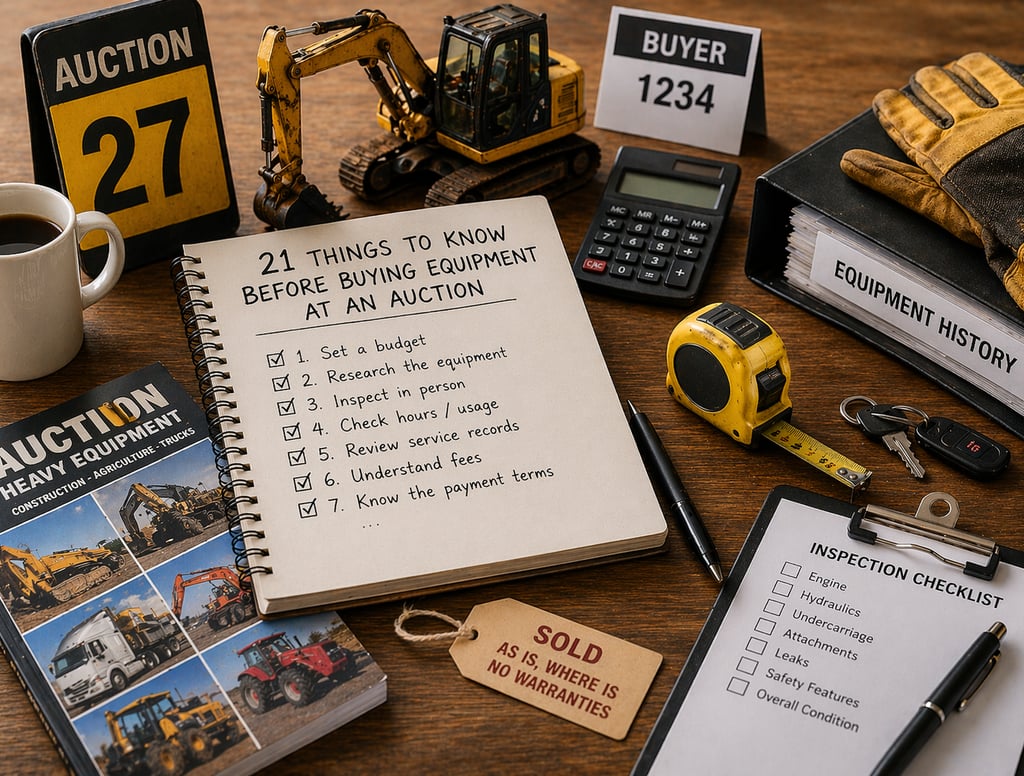
Many buyers walk into auctions expecting a deal—only to leave paying more than they planned or buying something they didn’t fully understand.
The difference between saving thousands and making a costly mistake usually comes down to preparation. Auctions move fast, and once you bid, you’re committed. Here are 21 things you should know before buying equipment at an auction so you can avoid common mistakes and make better decisions.
Understanding How Auctions Actually Work
1. Not all auctions follow the same format
What it is: Auctions can be live, online, or hybrid, each with different rules and pacing.
Why it matters: Some move quickly with real-time bidding, while others extend time with last-minute bids.
What to do: Learn how the specific auction works before participating so you don’t react blindly.
2. “As-is” means no guarantees
What it is: Most auction items are sold without warranties or return options.
Why it matters: You assume all risk once the item is yours.
What to do: Treat every purchase as final and inspect or research carefully before bidding.
3. Sellers prioritize speed over price
What it is: Auctions are designed to move inventory quickly.
Why it matters: Items may sell below market value, but not always.
What to do: Focus on value and condition—not just price.
4. Starting bids are meant to attract attention
What it is: Opening prices are often set low.
Why it matters: This creates competition, which can push prices higher.
What to do: Ignore the starting bid—base your decisions on actual value.
Evaluating Equipment Before You Bid
5. Surface condition doesn’t tell the full story
What it is: Equipment may look fine but have internal issues.
Why it matters: Mechanical wear isn’t always visible.
What to do: Check available details and assume additional inspection may be needed.
6. Usage matters more than age
What it is: Heavy use affects equipment more than how old it is.
Why it matters: A newer machine can be more worn than an older one.
What to do: Look for signs of wear, not just the year.
7. Missing components increase costs
What it is: Some equipment may not be complete.
Why it matters: Replacing parts adds to your total cost.
What to do: Confirm exactly what’s included before bidding.
8. Photos don’t show everything
What it is: Listings rely heavily on images.
Why it matters: Damage or wear may not be visible in photos.
What to do: Read descriptions closely and look for multiple angles.
Bidding Strategies That Actually Work
9. Set a firm budget before bidding
What it is: A maximum price you won’t exceed.
Why it matters: Prevents emotional decisions during bidding.
What to do: Decide your limit early and treat it as non-negotiable.
10. Timing your bid matters
What it is: When you place a bid can affect competition.
Why it matters: Early bids can attract more attention.
What to do: Observe the flow before participating.
11. Watching auctions is part of learning
What it is: Observing without bidding.
Why it matters: Helps you understand pricing behavior.
What to do: Spend time watching before jumping in.
12. Fast decisions lead to mistakes
What it is: Acting quickly under pressure.
Why it matters: Leads to overpaying or poor choices.
What to do: Stay disciplined and stick to your plan.
Costs Most Buyers Don’t Expect
13. Buyer’s premium adds to your total
What it is: A percentage added to your winning bid.
Why it matters: This increases your actual cost.
What to do: Always include it in your budget.
14. Transportation can be expensive
What it is: Moving equipment after purchase.
Why it matters: Large items require specialized transport.
What to do: Plan logistics before bidding.
15. Taxes and additional fees apply
What it is: Extra charges beyond the bid.
Why it matters: Final cost may be higher than expected.
What to do: Review all fees in advance.
16. Repairs are often necessary
What it is: Post-purchase maintenance or fixes.
Why it matters: Even good deals may require work.
What to do: Budget for repairs before buying.
Where Buyers Commonly Make Mistakes
17. Assuming every item is a bargain
What it is: Believing auctions always offer lower prices.
Why it matters: Competition can drive prices up.
What to do: Compare with market value.
18. Skipping the fine print
What it is: Ignoring auction terms and conditions.
Why it matters: Rules affect payment and pickup.
What to do: Read everything before bidding.
19. Expecting easy resale profit
What it is: Planning to flip equipment.
Why it matters: Market demand isn’t guaranteed.
What to do: Buy based on need or known value.
20. Letting urgency drive decisions
What it is: Feeling pressured to act quickly.
Why it matters: Leads to poor judgment.
What to do: Prepare before the auction starts.
21. Not reviewing real auction listings beforehand
What it is: Entering auctions without understanding how listings work.
Why it matters: You won’t know what to expect in pricing, condition, or structure.
What to do: Study real examples—looking at listings like equipment auctions like this helps you understand how items are presented, priced, and sold in actual conditions.
Quick Auction Buyer Checklist
☐ Research the item’s market value
☐ Set a strict bidding limit
☐ Understand all fees and terms
☐ Plan transport and logistics
☐ Expect possible repair costs
Frequently Asked Questions
Are auctions always cheaper than buying retail?
Not always. Prices depend on demand, timing, and competition. Some items sell at or above market value.
Is buying equipment at auction risky?
It can be if you don’t prepare. Most risk comes from lack of research, not the auction itself.
What’s the biggest mistake new buyers make?
Overbidding without factoring in total costs. Preparation is more important than speed.
Closing
Buying at auction can work in your favor—but only if you understand how the process actually works.
Good info, in one place—so you can move forward.
Contact
Questions? Reach out anytime.
Phone
hello@21goodinfo.com
© 2025. All rights reserved.