
21 Things to Do the First Week After Moving to [City] (Utilities, DMV, Trash, Schools)
Local Guides
3/10/20255 min read
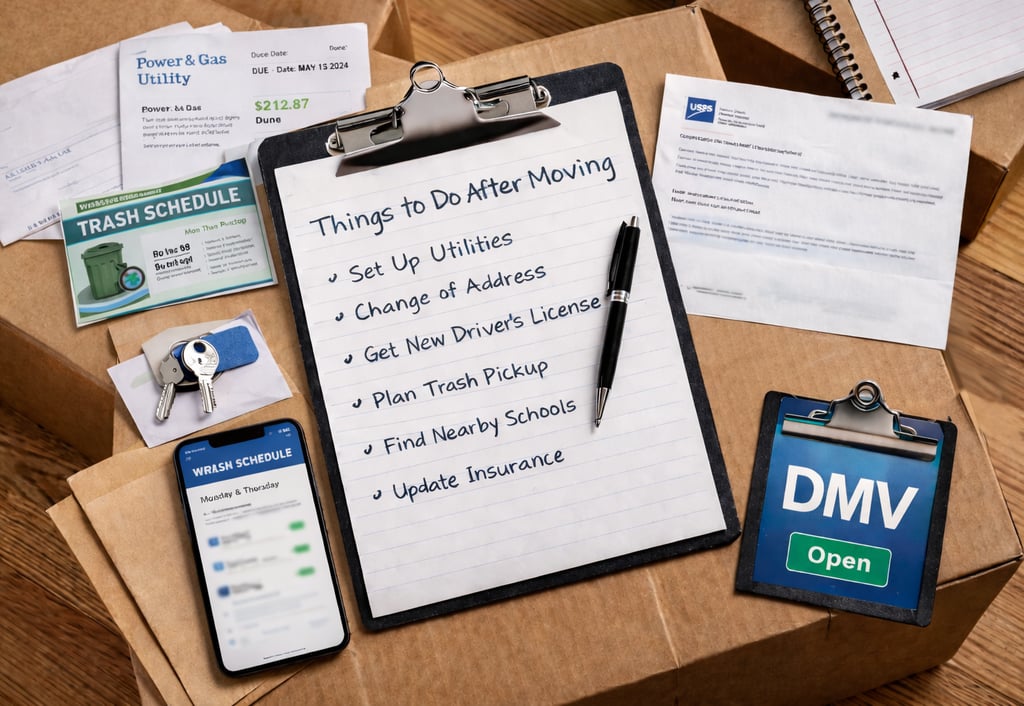
The first week after moving to a new city rarely goes the way you expect. Even if the move itself went smoothly, daily life feels unsettled. You don’t know which light switch controls what, trash day is a mystery, and simple errands take twice as long.
What makes the first week easier isn’t unpacking every box or decorating your space. It’s handling the behind-the-scenes tasks that keep your household functioning. Once those basics are in place, everything else starts to feel manageable.
This guide focuses on the things experienced movers usually prioritize during their first seven days in [City]. These are the steps that prevent small inconveniences from turning into bigger frustrations later.
Utilities & Essential Services
1. Confirm All Utilities Are Fully Active
Even if utilities were scheduled ahead of time, it’s important to confirm everything is working properly once you arrive. Turn on lights in every room, run water in sinks and showers, test heating or air conditioning, and check internet speed.
Catching issues early makes them easier to resolve. It’s far less stressful to fix a utility problem during your first few days than after you’ve settled into a routine.
2. Locate the Main Shutoff Valves and Breaker Panel
Most people don’t think about shutoff valves or breaker panels until there’s an emergency. Taking a few minutes to locate them now can save you from panic later.
Knowing where these are — and how to use them — is especially important if you’re new to the property or unfamiliar with the layout.
3. Set Up Trash and Recycling Service
Trash and recycling rules vary widely from city to city. Find out which day collection happens, where bins should be placed, and whether special containers are required.
During the first week, you’ll generate more trash than usual from unpacking. Missing pickup can quickly become inconvenient.
4. Learn Local Recycling Rules
What’s recyclable in one city may not be recyclable in another. Some areas accept glass, others don’t. Some require sorting, while others use single-stream recycling.
Reviewing [City]’s guidelines early helps you avoid rejected bins or fines and keeps your household in compliance.
5. Update Utility Account Information
Even if services are active, make sure your name, billing address, and contact information are correct with each provider.
This prevents missed bills, service interruptions, and confusion later, especially if there’s a problem that requires customer support.
Transportation & DMV Tasks
6. Update Your Driver’s License Address
Most states require you to update your driver’s license address within a specific timeframe after moving. Some allow online updates, while others require an in-person visit.
Starting this early helps you avoid long waits or last-minute deadlines, especially if DMV appointments fill up quickly in [City].
7. Register Your Vehicle If Required
If you’ve moved from another state, vehicle registration may be required. This process can include inspections, emissions testing, or proof of residency.
Checking requirements during your first week gives you time to gather documents without rushing.
8. Update Auto Insurance Details
Insurance coverage and rates often depend on location. Updating your address ensures your policy remains valid and accurate.
This step also prevents complications if you need to file a claim shortly after moving.
9. Learn Local Parking Rules
Parking rules can be very different from what you’re used to. Some cities require permits, alternate-side parking, or special passes for residential streets.
Learning these rules early helps you avoid tickets during an already busy week.
Home Setup & Safety
10. Test Smoke and Carbon Monoxide Detectors
Before settling in fully, test all smoke and carbon monoxide detectors. Replace batteries if needed and confirm they’re working properly.
This is a quick task that directly affects safety and peace of mind.
11. Change Exterior Locks if Necessary
If you’ve moved into a previously occupied home, changing the locks adds an extra layer of security. You never know how many spare keys exist.
Many experienced movers do this within the first week for peace of mind.
12. Walk Through the Home and Document Issues
Take photos and notes of any damage, maintenance concerns, or unfinished repairs. This is especially important for renters.
Documenting issues early protects you from disputes later and helps you prioritize repairs.
Mail, Paperwork & Records
13. Confirm Mail Forwarding Is Working
Mail forwarding can take time to fully kick in. Check that important mail is arriving and that nothing critical is missing.
Update addresses directly with banks, employers, and service providers instead of relying only on forwarding.
14. Update Your Address With Important Accounts
Make a list of places that need your new address: financial institutions, subscriptions, insurance providers, and employers.
Handling this early prevents missed notices, billing issues, and service disruptions.
15. Locate Nearby Post Office and Package Services
Knowing where the nearest post office, package lockers, and delivery drop-off points are saves time during a busy week.
This becomes especially useful if you’re receiving multiple deliveries or need to return items.
Schools, Childcare & Family Needs
16. Contact the Local School District
If you have children, reach out to the [City] school district right away. Confirm enrollment steps, documentation requirements, and start dates.
Early communication helps avoid delays and makes the transition smoother for everyone.
17. Visit Schools or Childcare Centers
Even if enrollment is complete, visiting helps children feel more comfortable and allows parents to ask practical questions.
Seeing the environment firsthand can ease anxiety and help establish routines.
18. Transfer Medical, Dental, and School Records
Request transfers for medical and school records as soon as possible. These requests can take time to process.
Having records ready prevents delays in care, enrollment, or appointments.
Daily Life & Getting Oriented
19. Find Nearby Essentials
Identify the closest grocery store, pharmacy, gas station, and urgent care center. Knowing where to go during everyday moments reduces stress.
This step alone can make a new city feel more manageable.
20. Learn About City Services and Resources
Spend time on [City]’s official website to learn about local services, events, and resources.
Knowing where to find information saves time later when questions come up.
21. Get to Know Your Neighborhood
Take a walk or drive around your neighborhood. Notice traffic patterns, nearby parks, and local businesses.
Familiarity builds comfort, and comfort helps a new place start to feel like home.
Quick Checklist: First Week After Moving to [City]
Use this as a reference, not a race.
Confirm utilities are active
Locate shutoff valves and breaker panel
Set up trash and recycling
Learn recycling rules
Update license and vehicle info
Update insurance
Learn parking rules
Test safety detectors
Change locks if needed
Document home condition
Confirm mail forwarding
Update important addresses
Contact school district
Transfer records
Find nearby essentials
FAQ
What should I focus on during the first week after moving?
Prioritize utilities, transportation paperwork, trash service, and essential services. These tasks make daily life easier right away.
How soon do I need to update my driver’s license after moving?
Most states require updates within 30 days, though timelines vary. Starting early helps avoid delays.
When should I contact the school district after moving?
As soon as possible, especially if your move happens mid-year.
How do I find city-specific trash and recycling rules?
Most cities publish schedules and guidelines on their official website or public works page.
Contact
Questions? Reach out anytime.
Phone
hello@21goodinfo.com
© 2025. All rights reserved.