21 Systems Every Small Service Business Needs (Scheduling, Reviews, Payments)
Work & Small Business Ops
7/28/20255 min read
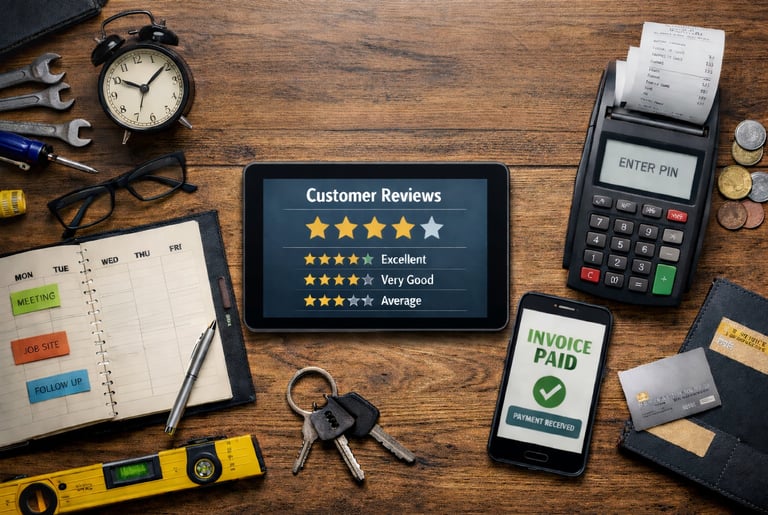
Most small service businesses don’t fail because the owner isn’t good at the work. They struggle because too much lives in their head. Appointments are remembered instead of tracked. Payments are followed up manually. Reviews are “meant to be asked for” but often forgotten.
When everything depends on memory, things eventually slip. Clients don’t get reminders. Invoices don’t go out on time. Messages get buried. None of this happens because you don’t care. It happens because there’s no system holding things together.
Systems aren’t about making your business cold or corporate. They’re about reducing stress, saving time, and creating consistency. When systems are in place, you don’t have to think about every small decision. You already know what happens next.
This guide walks through 21 systems every small service business needs, with a strong focus on scheduling, reviews, and payments. These are explained in plain language, with real-world context, so you can apply them without feeling overwhelmed.
Scheduling & Time Management Systems
1. Appointment Scheduling System
If booking you feels complicated, many potential clients won’t bother. They may intend to reach out later, but later rarely comes.
An appointment scheduling system removes friction. Clients can see when you’re available and book without back-and-forth messages. It also sets boundaries around your time, so you’re not responding to booking requests late at night or during personal hours.
Even if you don’t use automated software, having a consistent method for booking appointments makes a noticeable difference in how smoothly your days run.
2. Availability & Time Blocking System
Without time blocking, your calendar fills randomly. You might feel busy all day but still feel behind. Meetings, admin work, and actual service delivery bleed into each other.
Time blocking means deciding in advance when you work, when you take appointments, and when you handle admin tasks. This protects your energy and prevents burnout, especially when demand increases.
A simple system here creates predictability for both you and your clients.
3. Confirmation & Reminder System
Missed appointments cost time and money. Most no-shows aren’t intentional. People forget, especially when life gets busy.
A reminder system confirms appointments and gently nudges clients before the scheduled time. This reduces no-shows and last-minute cancellations without requiring awkward conversations.
Consistency is key. When reminders are automatic or routine, you don’t have to remember to send them.
4. Rescheduling & Cancellation System
Clients will need to reschedule. The issue isn’t rescheduling — it’s confusion around how and when it’s allowed.
A clear rescheduling and cancellation system sets expectations upfront. It protects your time while still being fair and flexible when needed.
This prevents frustration and keeps your calendar accurate.
5. Daily & Weekly Planning System
Jumping into each day without reviewing what’s ahead creates unnecessary stress. Small issues turn into big problems because they weren’t seen early.
A daily and weekly planning system gives you a chance to review appointments, deadlines, and priorities before things pile up. Even ten minutes at the start of the day can make a big difference.
This system helps you feel in control instead of reactive.
Customer Communication Systems
6. Client Intake System
Repeating the same questions over and over wastes time and increases the chance of miscommunication.
A client intake system gathers important information before work begins. This can include contact details, preferences, expectations, and any specifics related to the service.
Having this information upfront helps you prepare properly and sets the tone for a professional relationship.
7. Centralized Communication System
When messages are scattered across email, text, social media, and messaging apps, things get missed.
A centralized communication system helps you track conversations in one place or at least follow a consistent method for managing them. This becomes especially important as your client base grows.
Clear communication reduces misunderstandings and saves time.
8. Follow-Up Communication System
Many service businesses lose work simply because they forget to follow up. Quotes go unanswered. Messages sit without response. Past clients fade away.
A follow-up system ensures no opportunity slips through the cracks. It doesn’t have to be aggressive. It just needs to be consistent.
Follow-ups often feel awkward, but when they’re part of a system, they feel normal and professional.
9. Client Expectations System
Many disputes happen not because someone did something wrong, but because expectations weren’t aligned.
A client expectations system outlines timelines, scope, responsibilities, and boundaries clearly. This can be done through written confirmations, welcome messages, or pre-service documents.
Clear expectations build trust and reduce stress for everyone involved.
Job & Workflow Systems
10. Standard Operating Procedures (SOPs)
SOPs sound formal, but they’re simply written steps for common tasks. They ensure things are done consistently, even when you’re tired or busy.
Without SOPs, tasks are done differently each time, increasing mistakes and inefficiency. With them, you don’t have to reinvent the wheel.
Even basic SOPs can dramatically improve consistency.
11. Job Tracking System
If you don’t clearly track jobs, it’s easy to forget what’s in progress, what’s finished, and what’s waiting on someone else.
A job tracking system gives you visibility over your workload. It helps you see bottlenecks, manage timelines, and avoid dropped tasks.
This system becomes more valuable as your workload grows.
12. Materials & Preparation System
Last-minute scrambling wastes time and creates unnecessary stress. Forgetting tools, documents, or materials delays work and affects professionalism.
A preparation system ensures you know what’s needed before each job begins. This saves time and makes your service feel smoother and more reliable.
Preparation is often invisible to clients, but they feel the results.
Payment & Financial Systems
13. Pricing System
Inconsistent pricing leads to confusion and undercharging. It also makes quoting stressful.
A pricing system helps you charge confidently and consistently. It ensures clients are treated fairly and that your work is valued appropriately.
Clear pricing reduces negotiation and speeds up decision-making.
14. Invoicing System
Invoicing should not feel chaotic. When invoices go out late or inconsistently, payments slow down.
A consistent invoicing system ensures invoices are sent promptly, clearly, and professionally. This reduces late payments and awkward follow-ups.
Predictability helps clients pay faster.
15. Payment Collection System
If paying you feels inconvenient, payment gets delayed. People prioritize what’s easy.
A payment collection system makes it simple for clients to pay. Clear instructions and accessible options reduce friction.
When payment is easy, cash flow improves naturally.
16. Expense Tracking System
Expenses quietly eat into profits if they aren’t tracked. Many business owners don’t realize where money is going until tax time.
An expense tracking system gives you clarity. It helps you understand profitability and make better decisions.
Even simple tracking is better than none.
Reviews & Reputation Systems
17. Review Request System
Satisfied clients often don’t leave reviews unless asked. A review request system ensures you consistently collect feedback.
Reviews build trust with future clients and validate your work. Without a system, review requests are forgotten.
Consistency matters more than volume.
18. Review Monitoring & Response System
Reviews influence reputation, whether you respond to them or not. Ignoring reviews sends the message that feedback doesn’t matter.
A monitoring system helps you stay aware of new reviews and respond professionally. This builds credibility and trust.
Responding doesn’t have to be complicated — just consistent.
19. Referral System
Referrals are one of the strongest sources of new business, but they don’t happen automatically.
A referral system makes it easy for happy clients to refer you. This might involve simple reminders or clear instructions.
When clients know how to refer you, they’re more likely to do so.
Growth & Sustainability Systems
20. Capacity & Scaling System
Without understanding capacity, growth becomes stressful. You may overbook, undercharge, or burn out.
A capacity system helps you understand how much work you can realistically handle. It guides decisions around pricing, availability, and expansion.
Growth should feel manageable, not overwhelming.
21. Review & Improvement System
Strong businesses don’t stay static. They review what’s working and adjust regularly.
A simple review system — monthly or quarterly — helps you improve without drastic changes. Small adjustments over time lead to big improvements.
Reflection is a system, too.
Quick Checklist: Core Systems Every Small Service Business Needs
Appointment scheduling
Time blocking
Client intake
Communication tracking
Follow-ups
Job tracking
Pricing and invoicing
Payment collection
Review requests
Capacity planning
FAQ
Do I need all these systems at once?
No. Start with scheduling, invoicing, and communication. Build gradually.
Are systems only for larger businesses?
No. Small businesses benefit the most because systems reduce mental load.
Do systems make businesses feel impersonal?
Not when used thoughtfully. They create space for better personal service.
What’s the biggest mistake business owners make?
Trying to remember everything instead of building simple systems.
Contact
Questions? Reach out anytime.
Phone
hello@21goodinfo.com
© 2025. All rights reserved.