
21 Small Home Problems You Should Fix Early to Avoid Expensive Repairs
Discover 21 small home problems that can lead to expensive repairs if ignored. Learn what to fix early, what to watch for, and how to avoid costly mistakes.
3/16/20264 min read
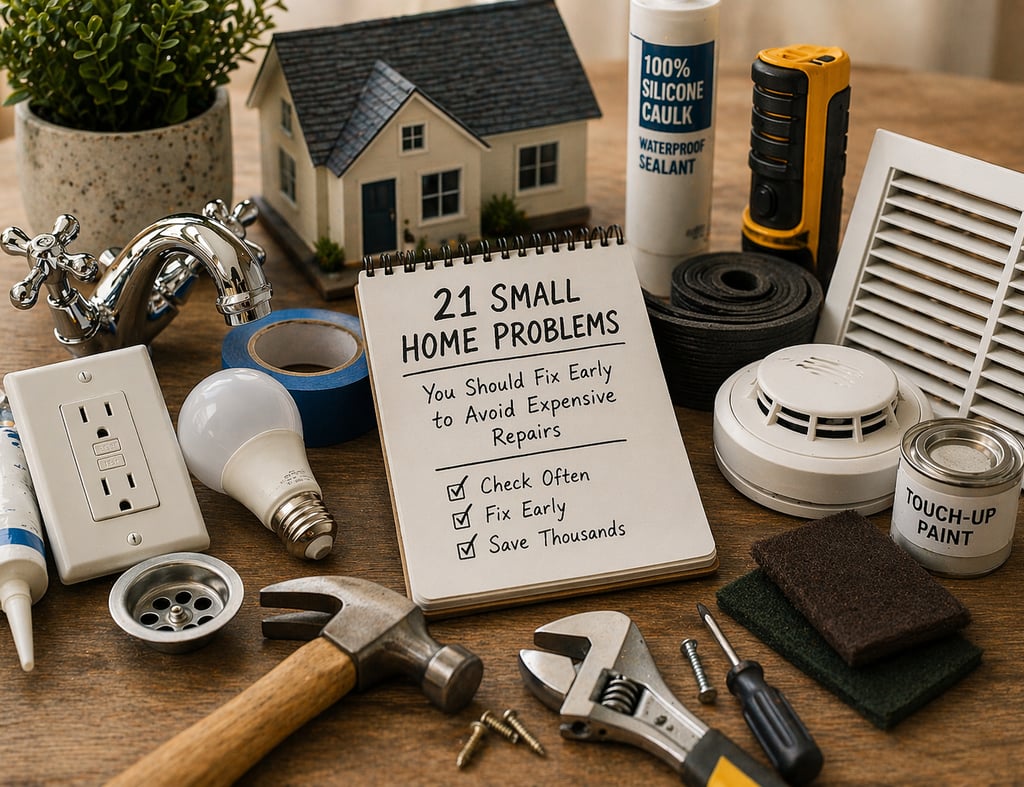
Ignoring small home issues is one of the fastest ways to turn a $50 fix into a $5,000 repair.
Most major home problems don’t start big—they build slowly from things that seem minor at first. The difference between a quick fix and a costly repair usually comes down to timing. Here are 21 small home problems you should catch early, what they actually mean, and what to do before they get expensive.
Plumbing Problems That Escalate Fast
1. Slow-draining sinks
What it is: Water draining slower than usual due to buildup inside pipes.
Why it matters: This is usually the first sign of a developing clog. If ignored, it can lead to a full blockage or pipe damage.
What to do: Clear buildup early or have it checked before it becomes a larger issue.
2. Small pipe leaks
What it is: Minor drips under sinks, behind fixtures, or near connections.
Why it matters: Even a slow leak can cause cabinet damage, mold, and warped flooring over time.
What to do: Address it immediately—situations like this often follow the same pattern as cases like this, where early repair prevents structural damage.
3. Low water pressure
What it is: Reduced flow from faucets or showers.
Why it matters: Could signal buildup, leaks, or system-wide issues.
What to do: Test multiple fixtures—if it’s widespread, the issue is deeper than a single outlet.
4. Running toilet
What it is: Water continues flowing after flushing.
Why it matters: Can waste hundreds of gallons per day and increase bills quickly.
What to do: Fix worn parts like flappers early—it’s one of the cheapest fixes with the biggest impact.
HVAC Issues That Get Expensive Quickly
5. Weak airflow
What it is: Air from vents feels weak or inconsistent.
Why it matters: Usually caused by clogged filters or duct restrictions, which strain the system.
What to do: Replace filters regularly and check airflow before it leads to system damage.
6. Strange HVAC noises
What it is: Banging, rattling, or buzzing sounds during operation.
Why it matters: Often signals loose or failing internal components.
What to do: Address early—small mechanical issues become major repairs if ignored.
7. Uneven room temperatures
What it is: Some rooms stay hotter or colder than others.
Why it matters: Indicates airflow or insulation problems, increasing energy usage.
What to do: Check vents, ducts, and insulation before adjusting the system itself.
8. Frequent system cycling
What it is: HVAC turns on and off more often than normal.
Why it matters: Causes wear on components and shortens system lifespan.
What to do: Investigate thermostat, airflow, and system sizing issues early.
Electrical Problems You Shouldn’t Ignore
9. Flickering lights
What it is: Lights dim or flicker unexpectedly.
Why it matters: Can signal wiring issues or overloaded circuits.
What to do: If it happens frequently, have the system checked before it escalates.
10. Tripping breakers
What it is: Circuit breakers shutting off repeatedly.
Why it matters: Indicates overload or faulty wiring.
What to do: Stop resetting repeatedly—identify and fix the root cause.
11. Warm outlets
What it is: Outlets or switches feel warm to the touch.
Why it matters: Potential fire risk caused by wiring issues.
What to do: Stop using the outlet and have it inspected immediately.
12. Outdated electrical panels
What it is: Older panels not designed for modern usage.
Why it matters: Limits power capacity and increases safety risks.
What to do: Consider upgrading if your system struggles with current demand.
Structural and Exterior Issues
13. Cracks in walls or ceilings
What it is: Visible cracks that change or grow over time.
Why it matters: May indicate structural movement, not just cosmetic damage.
What to do: Monitor changes—growing cracks need professional evaluation.
14. Roof leaks
What it is: Water entering through the roof during rain.
Why it matters: Even small leaks can lead to insulation damage and mold.
What to do: Fix immediately—roof problems worsen faster than most expect.
15. Poor drainage around the house
What it is: Water pooling near the foundation.
Why it matters: Leads to foundation damage and water intrusion.
What to do: Redirect water using grading or drainage solutions.
16. Rotting wood or trim
What it is: Soft, damaged, or decaying exterior wood.
Why it matters: Rot spreads and weakens structural elements.
What to do: Replace early before it affects larger sections.
Indoor Issues That Cost More Over Time
17. Mold or musty smells
What it is: Odor or visible signs of mold.
Why it matters: Indicates hidden moisture problems.
What to do: Identify and fix the moisture source—not just the surface.
18. Drafty windows or doors
What it is: Air leaks through gaps in openings.
Why it matters: Increases energy bills and reduces comfort.
What to do: Seal gaps and improve insulation where needed.
19. Peeling paint
What it is: Paint bubbling, cracking, or flaking.
Why it matters: Often caused by moisture or poor surface prep.
What to do: Fix the root cause before repainting.
20. Loose tiles or flooring
What it is: Tiles shifting or uneven flooring.
Why it matters: Suggests subfloor or moisture issues.
What to do: Repair early before it spreads to larger areas.
21. Persistent odors
What it is: Ongoing smells without a clear source.
Why it matters: Often signals hidden problems like mold or leaks.
What to do: Investigate thoroughly—masking odors doesn’t fix the issue.
Quick Home Maintenance Checklist
☐ Check under sinks for leaks monthly
☐ Replace HVAC filters every 1–3 months
☐ Test electrical outlets periodically
☐ Inspect roof and gutters seasonally
☐ Pay attention to unusual smells or sounds
Frequently Asked Questions
How often should I inspect my home?
Every few months is enough for basic checks. Regular inspection helps you catch issues before they grow.
When should I call a professional?
If the issue involves plumbing, electrical, or structural systems, it’s better to call early than wait.
Are small problems really that serious?
Most major repairs start small. Early action is almost always cheaper.
Closing
Fixing small problems early is one of the simplest ways to avoid expensive repairs later.
Good info, in one place—so you can move forward.
Contact
Questions? Reach out anytime.
Phone
hello@21goodinfo.com
© 2025. All rights reserved.