
21 Signs Your Home Feels “Off” (And What They Usually Point To)
21 subtle signs your home feels “off” and what they actually mean. Learn how airflow issues, hidden HVAC inefficiencies, and overlooked system problems affect your comfort and energy costs—and what to check before it gets worse.
4/15/20264 min read
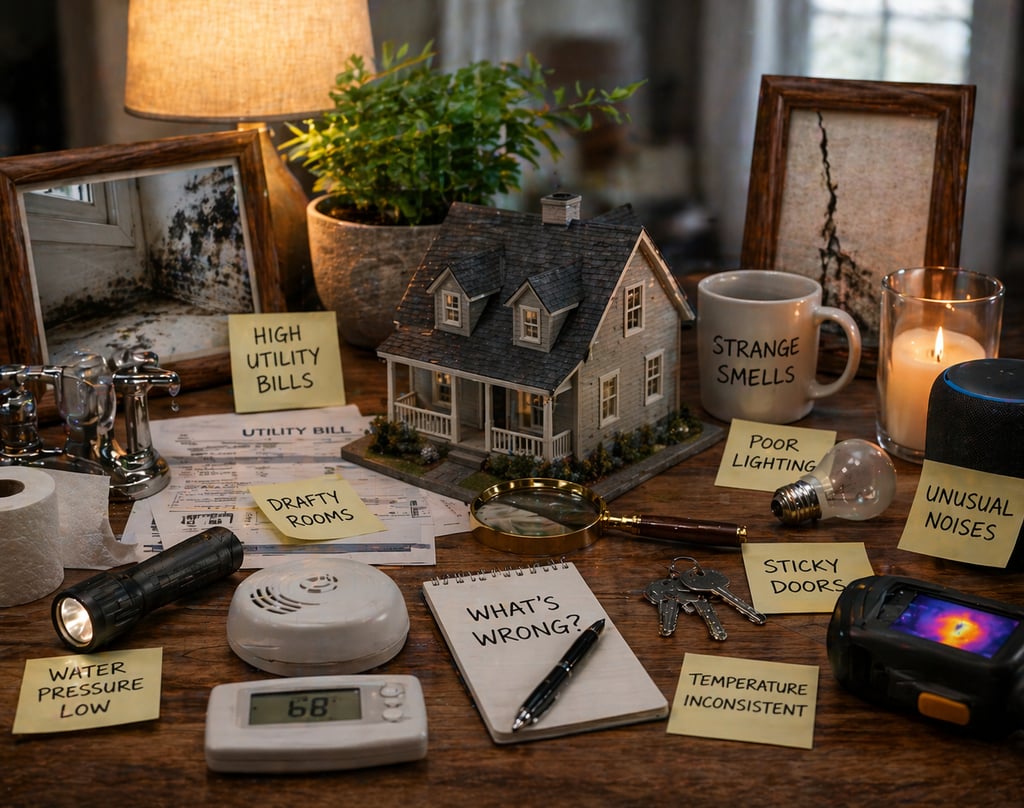
Most homeowners spend $100–$500 a year chasing comfort issues—higher energy bills, uneven rooms, constant adjustments—without ever fixing the real cause.
The problem isn’t random. It’s that small signals are easy to ignore until they turn into bigger, more expensive issues. Here’s how to recognize what your home is actually telling you—and what to do before it costs more.
Subtle Comfort Issues You Notice First
1. One Room Always Feels Slightly Off
What it is: A room that consistently feels warmer or cooler than the rest of your home.
Why it matters: This is usually an airflow imbalance, not just insulation. Before assuming structural issues, check vent strength and airflow consistency. If one room is consistently off, your system isn’t distributing air evenly.
2. You Adjust the Thermostat More Than You Used To
What it is: Constantly raising or lowering the temperature to stay comfortable.
Why it matters: This often means your system is compensating for inefficiencies. Instead of fixing the issue, you’re manually correcting it—which increases energy use over time.
3. Certain Rooms Take Longer to Change Temperature
What it is: Some areas respond slowly when heating or cooling kicks in.
Why it matters: This points to restricted airflow or longer duct runs. If it’s getting worse over time, buildup or partial blockages may be reducing system performance.
4. The House Feels Fine—But Not Consistently
What it is: Comfort levels change throughout the day without clear reason.
Why it matters: This usually means your system is sensitive to environmental changes, which often happens when airflow is already uneven.
Air & Breathing Clues Most People Ignore
5. Dust Comes Back Quickly After Cleaning
What it is: You clean surfaces, but dust returns within a day or two.
Why it matters: This suggests particles are being recirculated through your system. Surface cleaning doesn’t fix the source—it just resets the cycle.
6. The Air Feels “Heavy” in Certain Rooms
What it is: Some areas feel harder to breathe in, even if temperature is fine.
Why it matters: This often points to poor air circulation. When airflow is restricted, air stagnates instead of moving freely.
7. You Notice a Faint, Persistent Smell
What it is: A subtle odor that doesn’t go away, even after cleaning.
Why it matters: This can come from buildup inside your duct system or areas where air isn’t circulating properly.
8. Allergies Feel Worse Indoors
What it is: You feel more irritated inside your home than outside.
Why it matters: Poor airflow can keep particles circulating instead of filtering them out effectively.
Daily Habits That Quietly Change
9. You Avoid Certain Rooms Without Thinking About It
What it is: You naturally spend less time in certain areas of your home.
Why it matters: That’s usually a comfort issue you’ve adapted to instead of fixed.
10. You Rely on Fans More Than Before
What it is: Fans become your go-to fix for comfort.
Why it matters: Fans mask airflow problems—they don’t solve them.
11. You Keep Doors Open or Closed for Comfort
What it is: Adjusting doors to manage temperature differences.
Why it matters: This is a sign your system isn’t balancing airflow on its own.
12. Rearranging Furniture Changes Comfort Levels
What it is: Moving furniture affects how a room feels.
Why it matters: This indicates airflow sensitivity, often tied to system imbalance.
Hidden System Signals
13. Your Energy Bill Gradually Increases
What it is: Costs go up without a clear explanation.
Why it matters: Systems working harder due to airflow restrictions use more energy. Reviewing how airflow systems are maintained—like the breakdown provided in this Brentwood air duct cleaning guide helps explain where these inefficiencies usually come from.
14. Your HVAC System Runs Longer
What it is: The system stays on longer to reach the same temperature.
Why it matters: This often means resistance somewhere in the system, usually from airflow restrictions.
15. Airflow Feels Weak in Some Vents
What it is: Some vents push less air than others.
Why it matters: This is one of the clearest signs of imbalance or restriction.
16. You Hear Changes in Airflow Sounds
What it is: Whistling, rushing, or uneven airflow noise.
Why it matters: This can indicate pressure changes or blocked pathways.
Things You Notice But Don’t Connect
17. Comfort Changes With the Weather
What it is: Your home feels different depending on humidity or temperature outside.
Why it matters: External conditions amplify internal airflow problems.
18. Certain Areas Feel “Stale”
What it is: Air doesn’t feel fresh in some parts of your home.
Why it matters: This usually points to poor circulation, not cleanliness.
19. You Clean More Often Than You Used To
What it is: Dust and buildup seem constant.
Why it matters: The source is often internal airflow, not surface dirt.
20. You Feel More Comfortable Near Vents
What it is: Standing near vents feels noticeably better.
Why it matters: This suggests uneven distribution of conditioned air.
21. You’ve Just Accepted It as Normal
What it is: You assume your home “just feels this way.”
Why it matters: Most homeowners adapt instead of fixing the issue—which leads to higher costs over time.
Quick Wins You Can Apply Right Now
Check airflow strength at every vent
Make sure return vents aren’t blocked
Replace filters on schedule
Track patterns (not just one-time issues)
Don’t ignore gradual changes in comfort
Simple Script You Can Use
“Can you explain what’s affecting airflow in my home and how each part of the system is being checked?”
FAQ
Is it normal for rooms to feel different?
It’s common, but not ideal. Most cases can be improved with the right adjustments.
Do these signs always mean duct issues?
Not always, but airflow is one of the most common causes and should be checked early.
Can small inefficiencies really increase energy bills?
Yes. Small inefficiencies add up over time and often go unnoticed until costs are higher.
When should I take action?
As soon as you notice consistent patterns. Waiting usually increases cost and system strain.
Good info, in one place—so you can move forward.
Contact
Questions? Reach out anytime.
Phone
hello@21goodinfo.com
© 2025. All rights reserved.