
21 Problems You Can Avoid by Planning Your Outdoor Space Earlier
Many outdoor problems begin long before construction starts. Learn 21 common issues homeowners can avoid through better planning, including drainage concerns, erosion, poor traffic flow, privacy challenges, planting mistakes, and expensive landscape redesigns.
5/11/20269 min read
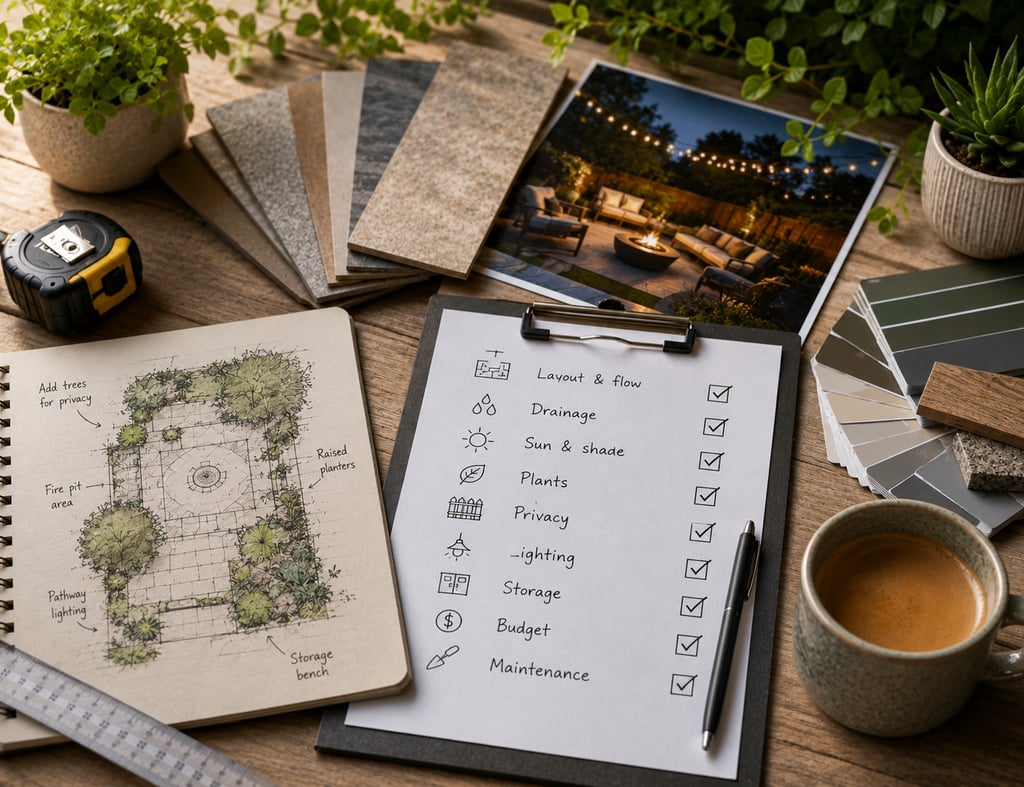
Many homeowners spend thousands of dollars improving their outdoor spaces only to discover avoidable problems later, from drainage issues and erosion to overcrowded plantings and expensive redesign projects. Most of these problems begin during the planning stage, not after construction. Taking time to think through how your yard will function can help you avoid costly mistakes, reduce maintenance demands, and create an outdoor space that serves your family for years to come.
Here are 21 common problems you can avoid by planning your outdoor space earlier.
Planning Fundamentals
1. Poor Traffic Flow
What it is: A yard layout that makes it difficult for people to move naturally from one area to another.
Why it matters: Homeowners often focus on how a landscape will look without considering how people will actually use it. If guests regularly walk across the lawn to reach a patio, garden, or play area, it may be a sign that pathways weren't planned effectively.
Poor traffic flow can lead to worn grass, muddy shortcuts, damaged planting beds, and frustration during everyday use. Before installing features, consider how family members, guests, pets, and service providers will move through the property. A well-planned outdoor space should feel intuitive rather than forcing people to find their own routes.
2. Underused Outdoor Areas
What it is: Sections of the yard that rarely get used because they lack a defined purpose.
Why it matters: Large yards don't automatically create better outdoor experiences. Many homeowners discover that significant portions of their property sit empty because no one knows how to use them.
When planning your outdoor space, assign a purpose to each area. One section may be designed for entertaining, another for gardening, another for children's activities, and another for relaxation. Defining uses before construction helps ensure that every part of the yard contributes value instead of becoming unused space that still requires maintenance.
3. Lack of Privacy
What it is: Outdoor spaces that feel exposed to neighbors, nearby roads, or adjacent properties.
Why it matters: Privacy issues often become obvious only after homeowners begin spending time outdoors. A patio that seemed perfect on paper may feel uncomfortable if it's directly visible from neighboring windows.
Planning for privacy early allows homeowners to strategically position trees, shrubs, fencing, pergolas, or screening features where they will be most effective. Addressing privacy during the design stage is usually easier and more affordable than trying to fix it later.
4. Inadequate Shade
What it is: Outdoor areas that receive excessive sunlight and become uncomfortable during warmer months.
Why it matters: Many outdoor living spaces look beautiful in photographs but become unusable during the hottest parts of the day. Patios, seating areas, and play spaces that lack shade often sit empty for much of the year.
When planning your landscape, pay attention to sun patterns throughout the day. Consider whether trees, pergolas, shade structures, or strategic plantings may improve comfort. A space that remains comfortable for longer periods will naturally get more use.
5. Future Expansion Conflicts
What it is: Landscape features that make future projects more difficult or expensive.
Why it matters: Many homeowners eventually add outdoor kitchens, pools, expanded patios, storage buildings, fire pits, or additional landscaping features. Problems arise when the original layout leaves no room for future growth.
Thinking several years ahead can prevent the need to remove recently installed features later. A little foresight can save significant money and frustration when your needs evolve.
Water and Ground Management
6. Soil Erosion
What it is: The gradual loss of soil caused by rainfall, runoff, wind, or poor grading.
Why it matters: Erosion can slowly undermine the appearance and stability of your landscape. Over time, it may expose plant roots, damage lawn areas, create uneven surfaces, and wash away valuable topsoil.
Properties with slopes are particularly vulnerable. Planning for proper grading, drainage, retaining walls, or erosion-control plantings helps keep soil where it belongs and reduces future maintenance requirements.
7. Standing Water
What it is: Water that collects in low spots and remains after rainfall.
Why it matters: Standing water is more than an inconvenience. It can damage turf, create muddy conditions, encourage mosquito activity, and make portions of the yard difficult to use.
Many homeowners don't notice drainage problems until after landscaping has been installed. Evaluating drainage patterns before beginning a project helps identify trouble spots early and allows for practical solutions before larger investments are made.
8. Improper Grading
What it is: Ground surfaces that direct water toward structures instead of away from them.
Why it matters: Improper grading is one of the most overlooked causes of long-term outdoor problems. Many homeowners focus on plants, patios, and decorative features first, but successful landscape installation often begins with grading, drainage planning, traffic flow, and long-term functionality.
Water should move away from structures whenever possible. Correct grading supports healthier plants, protects hardscape features, and helps reduce moisture-related concerns around the home.
9. Runoff Problems
What it is: Excess water moving across the property in ways that damage landscaping or create maintenance challenges.
Why it matters: Heavy rainfall can create surprisingly powerful runoff. Water may wash away mulch, carve channels through planting beds, damage grass, and transport soil from one area to another.
Identifying runoff patterns before construction allows homeowners to create solutions that direct water appropriately. This planning can significantly reduce future repair costs.
10. Foundation Moisture Issues
What it is: Water accumulating near the home's foundation due to poor drainage or grading.
Why it matters: Moisture management is one of the most important but often overlooked aspects of landscape planning. When water repeatedly collects near a foundation, it can create ongoing concerns that become costly to address.
While landscaping alone cannot solve every moisture problem, thoughtful drainage planning can help reduce unnecessary water accumulation near structures and support the long-term health of the property.
Plant Selection and Placement
11. Overcrowded Plantings
What it is: Installing plants too closely together without accounting for their mature size.
Why it matters: Newly planted landscapes often look sparse. This leads many homeowners to place plants closer together than recommended.
A few years later, shrubs begin competing for space, airflow decreases, maintenance becomes more difficult, and the landscape feels crowded. Planning for mature growth rather than immediate appearance creates healthier plants and a more balanced design.
12. Choosing Plants That Don't Match Local Conditions
What it is: Selecting plants that struggle with the local climate, sunlight levels, or soil conditions.
Why it matters: A plant may look beautiful at the garden center and still perform poorly in your yard. Plants that aren't suited to local conditions often require more water, more maintenance, and more frequent replacement.
Choosing plants based on their compatibility with your property's specific conditions generally leads to better long-term success and lower maintenance demands.
13. Root System Conflicts
What it is: Installing trees or large shrubs too close to structures, utilities, or hardscape features.
Why it matters: Roots need room to grow. When large plants are installed too close to sidewalks, patios, driveways, irrigation lines, or foundations, future conflicts become more likely.
Researching mature root behavior before planting helps prevent costly repairs and reduces the likelihood of having to remove established trees later.
14. Excessive Water Requirements
What it is: A landscape design that demands more irrigation than homeowners expect.
Why it matters: Water-intensive landscapes may look attractive initially but often create ongoing maintenance costs. During dry periods, homeowners may find themselves spending considerable time and money keeping plants healthy.
Selecting plants that align with local rainfall patterns can reduce irrigation needs while still providing visual appeal.
15. Seasonal Disappointment
What it is: A landscape that looks attractive during one season but lacks interest during the rest of the year.
Why it matters: Some landscapes deliver impressive spring color but feel empty for the remaining months. Others look great during summer but offer little visual interest during winter.
Planning for year-round appeal through a mix of plant types, bloom periods, textures, and colors helps create a landscape that remains enjoyable throughout the year.
Functionality and Everyday Use
16. Poor Patio Placement
What it is: Installing a patio in a location that doesn't support how the space will actually be used.
Why it matters: Patios are often one of the most expensive outdoor features homeowners install. Unfortunately, some end up receiving very little use because they were placed without considering sun exposure, privacy, accessibility, or views.
For example, a patio that receives direct afternoon sun during summer may become uncomfortable during the hours when people are most likely to use it. Similarly, a seating area positioned far from the house may discourage regular use because carrying food, drinks, or supplies becomes inconvenient.
When planning a patio, think beyond appearance. Consider how people will move to and from the space, how much shade it receives, and whether it supports the activities you expect to enjoy there.
17. Inconvenient Walkways
What it is: Paths that don't align with how people naturally move through the property.
Why it matters: People tend to choose the most direct and convenient route available. If a walkway forces users to take an indirect path, many will simply walk across grass or planting beds instead.
Over time, this can create worn areas, muddy patches, and landscape damage. Observing how people already move through the property before installing pathways can help create routes that feel natural and practical.
A good walkway doesn't force behavior. It supports it.
18. Insufficient Outdoor Lighting
What it is: Failing to plan for lighting before construction or installation begins.
Why it matters: Outdoor lighting improves safety, security, and usability. Yet it is often treated as an afterthought.
Adding lighting later may require trenching, rewiring, or disturbing finished landscape areas. By considering lighting during the planning stage, homeowners can create outdoor spaces that remain functional after sunset while highlighting key landscape features.
Proper lighting can also improve visibility on pathways, steps, and entrances, reducing potential safety concerns.
Long-Term Maintenance and Value
19. Constant Maintenance Demands
What it is: Creating a landscape that requires more ongoing work than expected.
Why it matters: A beautiful landscape that requires several hours of maintenance every week may become frustrating for busy homeowners.
High-maintenance plant selections, complex garden beds, excessive pruning requirements, and difficult-to-access areas can all contribute to long-term upkeep challenges.
When planning an outdoor space, be honest about how much time you realistically want to spend maintaining it. The most successful landscapes often balance beauty with practicality.
20. Reduced Curb Appeal
What it is: A yard that appears unfinished, disconnected, or inconsistent with the home's architecture.
Why it matters: Curb appeal isn't just about aesthetics. It influences how people perceive the property as a whole.
Landscapes that feel intentional and cohesive often create a stronger first impression than those that appear pieced together over time. Planning helps ensure that plantings, hardscape elements, lighting, and outdoor features work together instead of competing for attention.
A well-designed landscape can make a property feel more welcoming and complete.
21. Expensive Redesign Projects
What it is: Having to remove and replace recently installed landscape features because they were not planned properly.
Why it matters: This is often the most expensive consequence of poor planning.
A homeowner may install a patio only to discover it needs additional drainage. Trees may need relocation after growing too large. Walkways may need to be rebuilt because they don't follow natural traffic patterns.
Many redesign projects could have been avoided with more planning during the initial stages. Spending additional time upfront is almost always less expensive than rebuilding later.
Outdoor Space Planning Checklist
Before beginning a major outdoor project, review the following checklist:
Function
Does every area of the yard have a clear purpose?
Have I considered how people will move through the space?
Are gathering areas located where people will actually use them?
Water Management
Do I know where water flows during heavy rain?
Are there areas where water currently pools?
Is grading directing water away from structures?
Plant Selection
Have I considered mature plant size?
Are selected plants suited to local conditions?
Have root growth requirements been considered?
Maintenance
Does the design match my available maintenance time?
Will irrigation requirements be manageable?
Are seasonal maintenance needs realistic?
Future Growth
Have I left room for future projects?
Will today's decisions support long-term goals?
Have I planned for outdoor lighting and utilities?
The more questions you can answer before construction begins, the fewer surprises you're likely to face later.
5 Quick Outdoor Planning Wins
If you're not ready for a complete redesign, start with these practical improvements:
1. Observe Water After Rainfall
Walk your property after a heavy rain and identify where water collects, flows, or causes erosion.
2. Track Sun and Shade Patterns
Spend a few days observing how sunlight moves across the property. This information can influence plant selection and outdoor living areas.
3. Identify Natural Traffic Routes
Notice where people already walk. Existing behavior often reveals the best locations for future pathways.
4. Research Mature Plant Sizes
Before planting anything, learn how large it will become in five, ten, or twenty years.
5. Think Beyond This Season
Plan for how the landscape will function several years from now, not just how it will look immediately after installation.
Frequently Asked Questions
How early should outdoor space planning begin?
Ideally, planning should begin before any major landscaping, planting, or hardscape work starts. Addressing drainage, grading, traffic flow, and future needs early is often far easier than correcting problems after construction is complete.
Is planning really necessary for small yards?
Yes. Smaller yards often require even more thoughtful planning because every square foot matters. Limited space means mistakes can have a larger impact on functionality and usability.
Can landscaping decisions affect long-term property costs?
Absolutely. Drainage problems, erosion, excessive maintenance requirements, and poorly placed features can all create ongoing expenses. Thoughtful planning helps reduce many of these risks.
What is the most commonly overlooked aspect of outdoor design?
Water management. Many homeowners focus first on plants, patios, and visual features, while drainage and grading issues often become the most expensive problems to correct later.
Final Thoughts
Many outdoor problems don't begin with poor maintenance.
They begin with poor planning.
The good news is that most of these challenges are preventable when homeowners take time to think beyond appearance and consider how their outdoor space will function over the long term.
Water flow, privacy, traffic patterns, plant growth, maintenance requirements, and future projects all influence whether a landscape remains enjoyable years after installation.
The most successful outdoor spaces aren't necessarily the most expensive.
They're the ones that were thoughtfully planned from the beginning.
A well-planned yard doesn't just look better.
It works better.
Good info, in one place—so you can move forward.
Contact
Questions? Reach out anytime.
Phone
hello@21goodinfo.com
© 2025. All rights reserved.