
21 Plumbing Problems You Can Catch Early (Before They Turn Into Expensive Repairs)
21 plumbing problems you can catch early before they become expensive repairs. Learn warning signs, hidden costs, and practical fixes every homeowner should know.
3/27/20264 min read
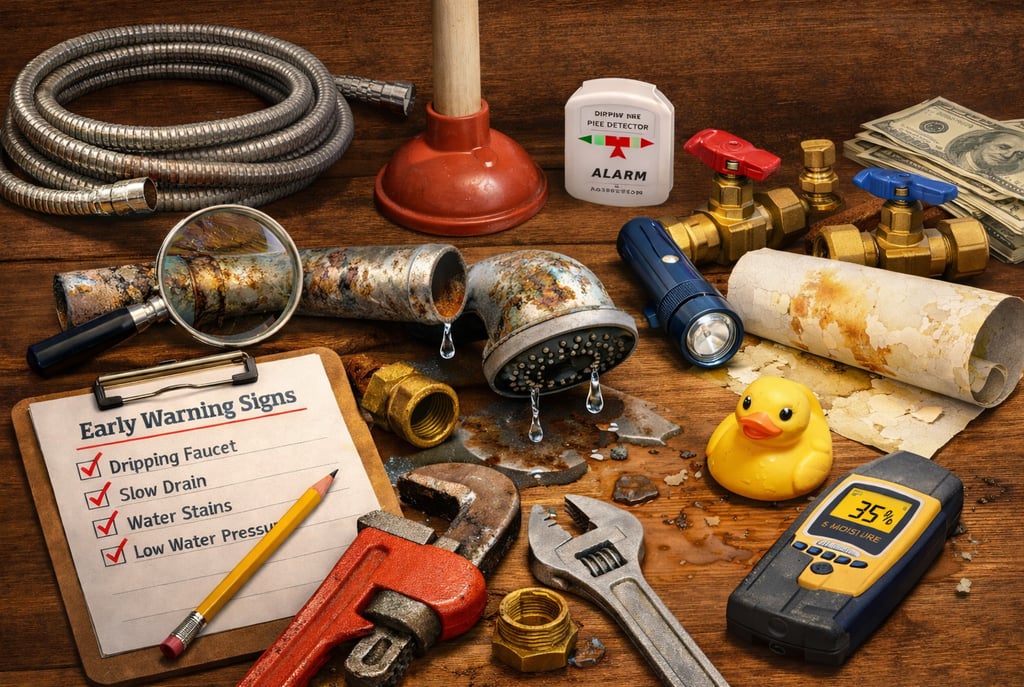
A small plumbing issue can quietly turn into a $1,000–$5,000 repair if you wait too long.
Most homeowners don’t notice problems until there’s visible damage—but plumbing issues almost always start small. If you know what to look for, you can catch them early and avoid bigger costs later. Here are 21 plumbing problems you can spot early, what they mean, and what to do before they get expensive.
Leaks That Start Small but Cost Big
1. Dripping faucet
What it is: A faucet that continues to drip after being turned off.
Why it matters: It wastes water and signals worn internal parts. Over time, mineral buildup can make a simple repair more complicated.
What to do: Replace the washer or cartridge early. This is one of the cheapest fixes you can make.
2. Water under the sink
What it is: Moisture or small puddles in your cabinet.
Why it matters: Even slow leaks can damage wood, lead to mold, and weaken the cabinet structure.
What to do: Check supply lines and connections. Tighten fittings or replace seals before damage spreads.
3. Toilet base moisture
What it is: Water pooling around the base of the toilet.
Why it matters: Usually a failed wax ring. Left alone, it can rot the subfloor and increase repair costs significantly.
What to do: Replace the seal early before flooring damage occurs.
4. Damp spots on ceilings or walls
What it is: Discoloration, bubbling paint, or soft drywall.
Why it matters: This usually means a hidden leak behind the surface. Damage spreads quickly once it reaches insulation and framing.
What to do: Investigate immediately. Hidden leaks get expensive fast.
Drain Problems That Get Worse Over Time
5. Slow drains
What it is: Water draining more slowly than normal.
Why it matters: Early buildup from grease, hair, or debris. Left alone, it turns into a full blockage.
What to do: Use a plunger or drain snake early. Avoid repeated chemical cleaners.
6. Recurring clogs
What it is: A clog that keeps coming back.
Why it matters: This usually signals a deeper blockage further down the system—not just surface buildup.
What to do: Recurring issues often point to larger system problems that need proper inspection how these issues are handled in practice. Don’t keep treating the symptom.
7. Gurgling sounds
What it is: Bubbling noises from drains or toilets.
Why it matters: Caused by trapped air from blockages or venting issues. It’s an early warning sign.
What to do: Address it early before it turns into a full blockage.
8. Bad drain odors
What it is: Sewer-like smell from drains.
Why it matters: Can indicate buildup, dry traps, or sewer line issues.
What to do: Identify the source before it becomes a larger issue.
Water Pressure & Flow Issues
9. Low water pressure
What it is: Weak flow from fixtures.
Why it matters: Often ignored, but can point to buildup, leaks, or pipe issues.
What to do: Clean aerators first. If it affects multiple fixtures, investigate further.
10. Sudden pressure drop
What it is: Unexpected decrease in pressure.
Why it matters: Often linked to hidden leaks or system disruptions.
What to do: Check immediately—sudden changes usually mean something shifted.
11. Uneven pressure between fixtures
What it is: One fixture works fine, another doesn’t.
Why it matters: Indicates localized blockages or pipe wear.
What to do: Check individual lines before assuming a whole-system issue.
12. Banging pipes (water hammer)
What it is: Loud knocking when water is turned on or off.
Why it matters: Pressure shock damages pipes over time.
What to do: Install a pressure regulator or arrestor.
Water Heater Warning Signs
13. Inconsistent hot water
What it is: Temperature fluctuates.
Why it matters: Often caused by sediment buildup or failing components.
What to do: Flush the tank or check heating elements.
14. Rusty or discolored hot water
What it is: Brown or cloudy water from hot taps.
Why it matters: Indicates internal tank corrosion.
What to do: Inspect the anode rod or prepare for replacement.
15. Strange heater noises
What it is: Popping or rumbling sounds.
Why it matters: Sediment buildup reduces efficiency and damages the tank.
What to do: Flush the system early.
16. Water around the heater
What it is: Moisture or pooling near the base.
Why it matters: Often a sign the tank is failing.
What to do: Plan replacement before it turns into a major leak.
Hidden Plumbing Problems That Show Up Later
17. Pipe corrosion
What it is: Rust or flaking on exposed pipes.
Why it matters: Weakens pipes and leads to leaks.
What to do: Replace affected sections early.
18. Frozen pipe risk
What it is: Pipes exposed to cold temperatures.
Why it matters: Frozen pipes can burst and cause major damage.
What to do: Insulate before winter.
19. High water bills
What it is: Sudden increase without higher usage.
Why it matters: Often caused by hidden leaks.
What to do: Investigate immediately.
20. Water meter movement
What it is: Meter runs when no water is in use.
Why it matters: Confirms a hidden leak somewhere in the system.
What to do: Shut everything off and test.
21. Aging plumbing system
What it is: Pipes older than 20–30 years.
Why it matters: Older systems are more prone to failure and costly repairs.
What to do: Plan upgrades before problems escalate.
Quick Plumbing Checklist
☐ Check under sinks monthly
☐ Monitor your water bill
☐ Fix slow drains early
☐ Test water pressure regularly
☐ Inspect your water heater yearly
☐ Listen for unusual sounds
A Simple Script You Can Use
“I’ve been noticing [describe issue] happening repeatedly. Can you check if this is a deeper system problem and explain what’s included in the repair?”
Frequently Asked Questions
How do I know if a plumbing issue is serious?
If it repeats, spreads, or affects multiple fixtures, it’s likely deeper in the system.
Is low water pressure always a plumbing issue?
Not always, but whole-house pressure changes usually point to something bigger.
When should I call someone?
If the issue keeps coming back or isn’t clearly visible, it’s time to have it checked.
Are chemical drain cleaners safe?
Occasional use is fine, but repeated use can damage pipes over time.
Plumbing problems don’t usually show up all at once—they build over time while staying easy to ignore.
Catching them early is what keeps a small fix from turning into a major repair.
Good info, in one place—so you can move forward.
Contact
Questions? Reach out anytime.
Phone
hello@21goodinfo.com
© 2025. All rights reserved.