
21 Mistakes You Make When Cooking Ribs at Home (And Why They Cost More Than You Think)
Avoid wasting money on tough, dry ribs. Learn the 21 most common mistakes people make when cooking ribs at home—and how to fix them for better flavor, texture, and results every time.
4/3/20266 min read
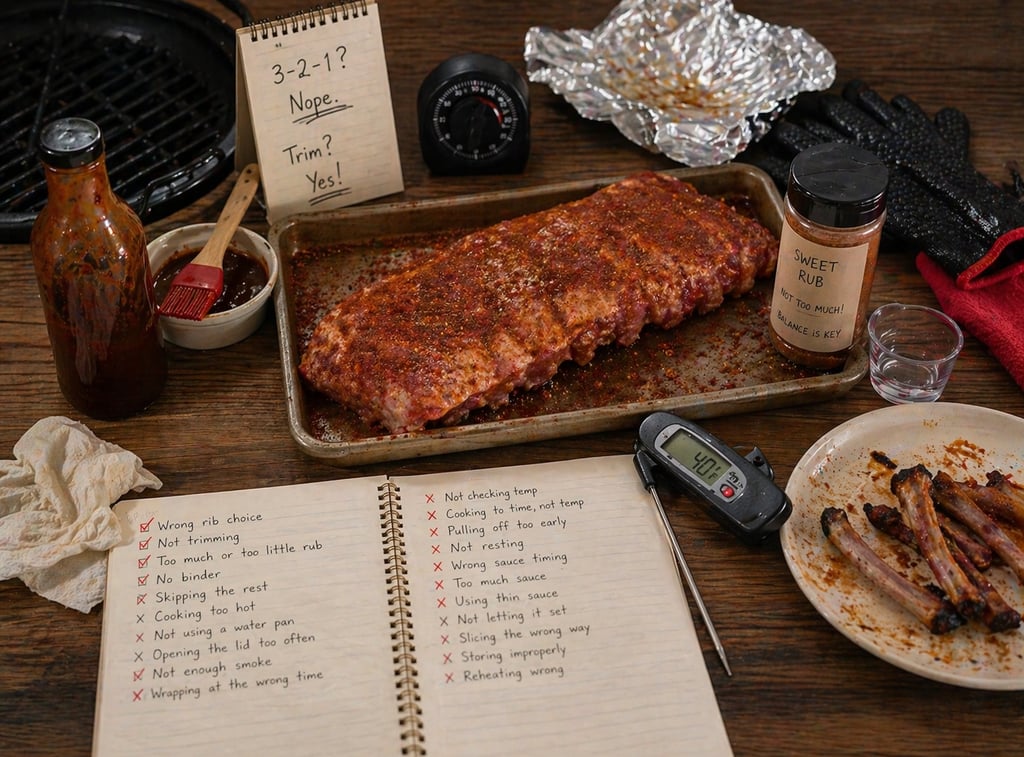
A single rack of ribs can cost $15–$30—and one small mistake can turn that into a dry, tough, or disappointing meal.
What makes it frustrating is that most of these mistakes aren’t obvious. They happen in small decisions before, during, and after cooking. Here’s exactly what goes wrong, why it matters, and what to do differently so you stop wasting time, money, and good ingredients.
Choosing the Wrong Starting Point
1. Buying the wrong cut of ribs
What it is: Choosing between baby back, spare ribs, or St. Louis style without understanding how each behaves when cooked.
Why it matters: Each cut responds differently to heat, timing, and seasoning. Baby backs are leaner and cook faster, while spare ribs have more fat and connective tissue, which means they need longer cooking to become tender. If you mismatch the cut with your method, you either dry them out or end up with something chewy. Always decide your cooking approach first, then choose the cut that fits it.
2. Ignoring meat quality
What it is: Picking ribs based only on price instead of appearance and structure.
Why it matters: Low-quality ribs often have uneven thickness, poor fat distribution, and less meat between the bones. That leads to inconsistent cooking where some parts are overdone while others are undercooked. Look for racks with even thickness, visible marbling, and minimal excess liquid in the packaging. It’s one of the simplest ways to improve results without changing anything else.
3. Not removing the membrane
What it is: Leaving the thin, rubbery membrane on the back of the ribs.
Why it matters: This layer doesn’t break down during cooking. It blocks seasoning from penetrating and creates a tough bite even if everything else is done correctly. Removing it improves both texture and flavor. Use a paper towel to grip it and pull it off in one piece—it’s quick and worth the effort.
4. Overbuying “just in case”
What it is: Purchasing more ribs than you realistically need.
Why it matters: While ribs shrink during cooking, overestimating portions still leads to waste—especially if leftovers aren’t stored properly. A better approach is to plan based on appetite and side dishes. Roughly half a rack per person is a reliable starting point. It keeps costs controlled and reduces unnecessary leftovers.
Preparation Mistakes That Ruin Flavor
5. Skipping seasoning time
What it is: Applying a dry rub and cooking immediately.
Why it matters: Seasoning doesn’t just sit on the surface—it needs time to draw out moisture and reabsorb into the meat. This process builds deeper flavor. Let ribs sit for at least 30 minutes, but if you can, refrigerate them overnight. That extra time creates a noticeable difference in taste and texture.
6. Using sauce too early
What it is: Coating ribs in sauce at the beginning of cooking.
Why it matters: Most barbecue sauces contain sugar, which burns under prolonged heat. When applied too early, it creates a bitter, charred exterior that hides the actual flavor of the meat. Instead, cook the ribs first and apply sauce during the final stage so it caramelizes lightly instead of burning.
7. Overloading with seasoning
What it is: Using too much rub or combining too many spices at once.
Why it matters: More seasoning doesn’t always mean better flavor. Too much salt or sugar can overwhelm the meat, while too many spices can create a muddled taste. Keep your seasoning balanced—simple combinations often produce the best results because they highlight the meat instead of masking it.
8. Not understanding basic prep expectations
What it is: Starting without a clear reference for how ribs should look and feel before cooking.
Why it matters: Many mistakes happen because expectations are unclear. The thickness, trimming, and preparation of ribs all affect the outcome. Looking at examples—such as how ribs are typically prepared and handled—can help you understand what you’re aiming for before you even turn on the heat.
Cooking Process Mistakes
9. Cooking at high heat
What it is: Turning up the temperature to speed up cooking.
Why it matters: Ribs rely on low, steady heat to break down connective tissue. High heat cooks the outside too quickly while leaving the inside tough. The result is dry, uneven meat. Keeping the temperature low allows the fat and collagen to render slowly, creating tenderness instead of dryness.
10. Opening the grill too often
What it is: Frequently lifting the lid to check progress.
Why it matters: Every time you open the grill or oven, you lose heat and disrupt the cooking environment. This extends cooking time and makes it harder to maintain consistency. Set a schedule for checking instead of reacting impulsively.
11. Using direct heat
What it is: Placing ribs directly over flames or heat sources.
Why it matters: Direct heat causes burning and uneven cooking. Ribs need indirect heat so they cook gradually. Position them away from direct flames and let heat circulate around them. This creates a more controlled and even result.
12. Skipping moisture control
What it is: Cooking ribs in a completely dry environment.
Why it matters: Long cooking times without moisture cause the surface to dry out before the inside becomes tender. Adding a water pan or lightly spritzing the ribs during cooking helps maintain moisture levels and improves texture.
13. Overcooking to “play it safe”
What it is: Leaving ribs on the heat longer than necessary to avoid undercooking.
Why it matters: Overcooking breaks down the structure of the meat too much, making it mushy rather than tender. The goal is a balance—soft but still holding together. Learning to recognize that point saves both time and quality.
Timing and Patience Problems
14. Expecting fast results
What it is: Treating ribs like a quick meal instead of a slow process.
Why it matters: Ribs are built for slow cooking. Trying to rush them leads to tough, underdeveloped texture. Plan your cooking time ahead so you’re not tempted to increase heat or cut corners.
15. Skipping the resting period
What it is: Cutting into ribs immediately after removing them from heat.
Why it matters: Resting allows juices to redistribute throughout the meat. If you skip this step, those juices run out when you cut, leaving the ribs dry. Even a short rest of 10–15 minutes improves the final result.
16. Judging doneness by time alone
What it is: Relying strictly on cooking time instead of physical signs.
Why it matters: Time is only a guideline. Ribs are ready when they bend easily, the meat pulls back from the bones, and a toothpick slides in with little resistance. Paying attention to these cues gives you better results than watching the clock.
Equipment and Setup Issues
17. Poor grill setup
What it is: Not preparing your grill for indirect cooking.
Why it matters: Without proper setup, heat distribution becomes uneven. This leads to inconsistent cooking and frequent adjustments. Taking a few extra minutes to set up your grill correctly saves hours of frustration later.
18. Not using a thermometer
What it is: Guessing temperature instead of measuring it.
Why it matters: Temperature control is one of the biggest factors in successful ribs. A thermometer removes uncertainty and helps maintain a stable cooking environment.
19. Using inconsistent fuel
What it is: Cooking with low-quality charcoal or wood.
Why it matters: Cheap or inconsistent fuel produces uneven heat and unpredictable results. Investing in reliable fuel ensures steady cooking and better flavor.
Serving and Storage Mistakes
20. Cutting ribs the wrong way
What it is: Slicing without following the bone structure.
Why it matters: Cutting incorrectly leads to uneven portions and wasted meat. Flip the rack over to clearly see the bones and slice between them for clean, even pieces.
21. Storing leftovers improperly
What it is: Leaving ribs exposed or loosely wrapped after cooking.
Why it matters: Exposure to air dries out the meat quickly. Wrap leftovers tightly and refrigerate them as soon as possible to preserve flavor and texture. Proper storage makes reheating much more enjoyable.
Quick Checklist
☐ Choose the right cut for your cooking method
☐ Remove the membrane before seasoning
☐ Let seasoning sit before cooking
☐ Maintain low, steady heat
☐ Use indirect cooking methods
☐ Monitor temperature with a thermometer
☐ Allow ribs to rest before serving
FAQ
How long should ribs cook?
Most ribs take 3–6 hours depending on the cut and cooking method. The key is maintaining consistent, low heat rather than focusing on speed.
Should ribs fall off the bone?
Not necessarily. Properly cooked ribs should be tender but still have slight resistance. Falling off the bone often means they’ve been overcooked.
Can you make good ribs without a smoker?
Yes. An oven or standard grill can produce excellent ribs as long as temperature and moisture are controlled properly.
What’s the most common mistake beginners make?
Rushing the process. Trying to cook ribs too quickly usually results in tough, uneven meat.
Good info, in one place—so you can move forward.
Contact
Questions? Reach out anytime.
Phone
hello@21goodinfo.com
© 2025. All rights reserved.