
21 Mistakes You Make After Being Charged With a Crime (And How They Make Things Worse)
21 common mistakes people make after being charged with a crime and how they can make the situation worse. Learn practical steps to avoid costly errors, protect your future, and handle the process more confidently.
4/13/20264 min read
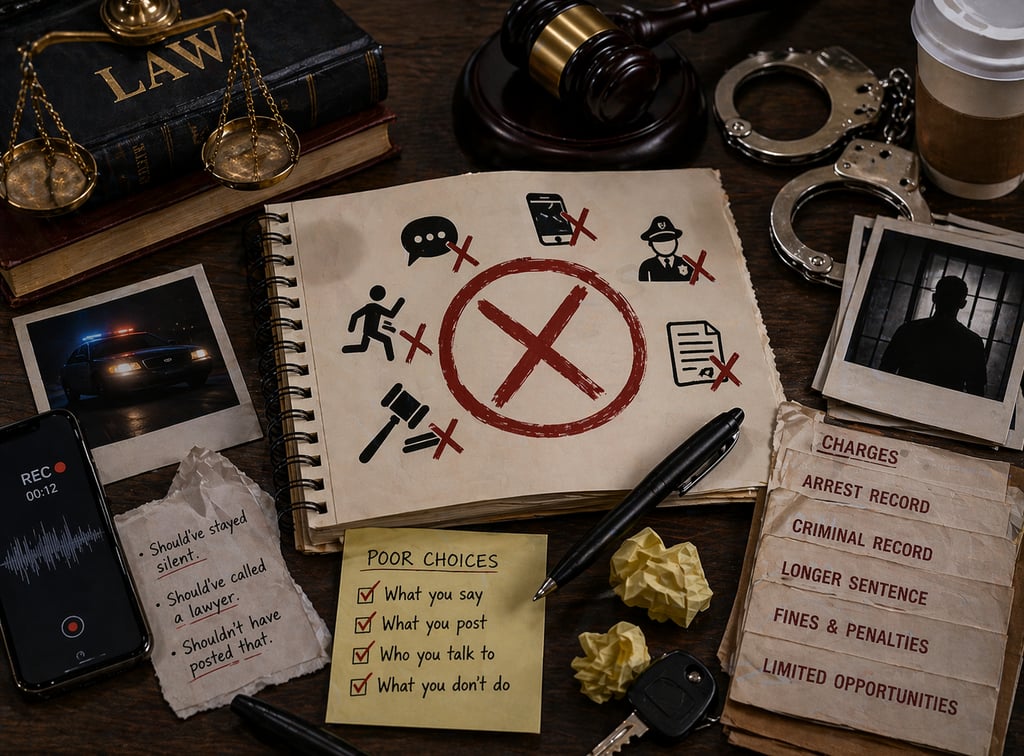
A single mistake after being charged with a crime can affect your record, your finances, and your future opportunities far more than most people expect. The biggest problem isn’t always the charge itself—it’s the decisions people make right after. Here’s what people commonly get wrong, why it matters, and how to avoid making a difficult situation worse.
Early Reactions That Backfire
1. Talking Too Much to Authorities
What it is: Trying to explain your side immediately without fully understanding your situation.
Why it matters: Even honest statements can be misunderstood or taken out of context. Once something is said, you can’t take it back. A better approach is to stay respectful, answer only what’s required, and avoid volunteering extra details until you’re fully informed.
2. Assuming You Can “Clear It Up Quickly”
What it is: Believing the situation can be resolved with a simple explanation.
Why it matters: Legal processes follow structured steps. Acting casually or assuming it will go away often leads to missed opportunities to respond properly early on.
3. Downplaying the Situation
What it is: Treating the charge as minor because it doesn’t feel serious.
Why it matters: Even smaller charges can lead to long-term consequences depending on how they’re handled. Taking it seriously early helps you make better decisions.
4. Waiting Too Long to Act
What it is: Delaying decisions, responses, or preparation.
Why it matters: Timing matters. Missing early steps can limit your options later and make things harder to fix.
Communication Mistakes That Hurt Your Case
5. Posting About It on Social Media
What it is: Sharing your situation, opinions, or frustrations online.
Why it matters: Posts can be reviewed and interpreted in ways you didn’t intend. Even something that seems harmless can create unnecessary complications. The safest move is to stay completely offline about the situation.
6. Talking to Too Many People
What it is: Discussing your situation openly with friends or coworkers.
Why it matters: Information spreads quickly, and details can change as they pass between people. Keeping your situation private helps you stay in control.
7. Repeating Your Story Multiple Times
What it is: Explaining what happened over and over to different people.
Why it matters: Small differences in how you explain things can create inconsistencies. Over time, those inconsistencies can become a problem.
8. Assuming Your Messages Are Private
What it is: Believing texts, emails, or calls won’t be seen later.
Why it matters: Written communication can be reviewed or misunderstood. It’s safer to keep communication simple and limited.
Decision Mistakes That Create Long-Term Problems
9. Making Fast Decisions Just to Reduce Stress
What it is: Acting quickly just to move past the situation.
Why it matters: Quick decisions often focus on short-term relief instead of long-term impact. Slowing down gives you more control.
10. Not Understanding Local Legal Context
What it is: Assuming all cases are handled the same everywhere.
Why it matters: Processes can vary depending on location, and those differences can affect timelines, expectations, and outcomes. Looking at how situations are handled locally—such as the context outlined by Powell Law Firm can give you a clearer picture of what to expect and how to respond more effectively.
11. Skipping Over Important Details
What it is: Not fully reading or understanding documents.
Why it matters: Small details can affect outcomes. Taking time to review everything carefully helps you avoid unnecessary mistakes.
12. Missing Deadlines
What it is: Forgetting or overlooking required dates.
Why it matters: Deadlines can affect your options. Missing one can create complications that are difficult to fix later.
13. Treating It Like a One-Step Process
What it is: Thinking everything ends after one decision or appearance.
Why it matters: Most situations involve multiple steps. Staying engaged throughout the process is important.
Behavior That Can Make Things Worse
14. Letting Emotions Take Over
What it is: Acting out of frustration, anger, or fear.
Why it matters: Emotional decisions often lead to actions you might regret later. Staying calm helps you think clearly.
15. Trying to Handle Everything Alone
What it is: Avoiding outside help or perspective.
Why it matters: It’s easy to miss details when you’re under pressure. Having a clear perspective helps you make better decisions.
16. Overcomplicating the Situation
What it is: Adding unnecessary explanations or steps.
Why it matters: Simplicity leads to clarity. The more complicated your response, the harder it becomes to manage.
17. Losing Track of Important Information
What it is: Not organizing documents, notes, or timelines.
Why it matters: Organization helps you stay prepared and respond quickly when needed.
Misunderstanding the Bigger Picture
18. Focusing Only on What Happens Next
What it is: Thinking only about the immediate step.
Why it matters: Long-term effects often matter more. Decisions now can affect future opportunities.
19. Underestimating Future Impact
What it is: Assuming the situation won’t follow you later.
Why it matters: Records can show up in background checks, applications, and more.
20. Not Asking Enough Questions
What it is: Accepting information without full understanding.
Why it matters: The more you understand, the better decisions you can make.
21. Thinking It’s Already Too Late
What it is: Believing nothing you do now will matter.
Why it matters: Many outcomes are shaped by decisions made later. It’s rarely as final as it feels.
Quick Wins You Can Apply Right Now
Pause before reacting—give yourself time to think clearly
Keep your situation private and controlled
Write down all deadlines, documents, and requirements
Stay consistent in what you say and how you respond
Focus on long-term outcomes, not just immediate relief
Simple Script You Can Use
“I understand the situation, but I’d like to take time to review everything carefully before responding further.”
This keeps communication respectful while giving you space to think.
FAQ
Should I explain everything right away?
Not necessarily. It’s better to understand your situation first before giving detailed explanations.
Is social media really that risky?
Yes. Even small posts can be misunderstood or used in ways you didn’t expect.
Do small mistakes actually matter?
They do. Small decisions early on often have bigger consequences later.
Can things still improve later?
Yes. Many outcomes are influenced by decisions made throughout the process, not just at the beginning.
Good info, in one place—so you can move forward.
Contact
Questions? Reach out anytime.
Phone
hello@21goodinfo.com
© 2025. All rights reserved.