
21 Mistakes You Make After an Accident (And How to Avoid Costly Consequences)
21 mistakes you make after an accident that can lead to costly consequences. Learn what to avoid, what matters most, and how to make better decisions early.
3/30/20264 min read
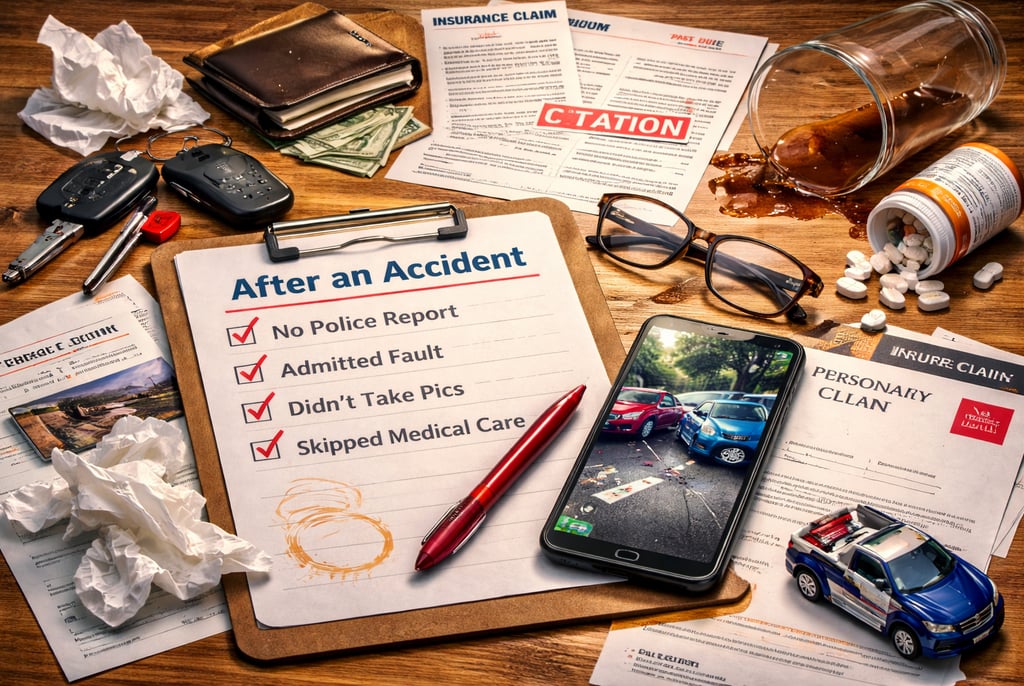
One wrong move after an accident can quietly cost you thousands—or limit your options before you even realize it.
Most people focus only on the moment, but what happens next is where outcomes are shaped. Here are 21 mistakes you make after an accident—and how to avoid them so you can protect yourself and make better decisions early.
Immediate Reactions That Backfire
1. Assuming you’re fine
What it is: Deciding nothing is wrong because you don’t feel immediate pain or damage.
Why it matters / What to do: Not all problems show up right away. Adrenaline can mask symptoms, and some issues take time to appear. Take a moment to assess yourself carefully, and don’t rely only on how you feel in the first few minutes.
2. Leaving too quickly
What it is: Trying to leave the situation before fully understanding what happened.
Why it matters / What to do: Leaving early means losing access to details that may be difficult to reconstruct later. Stay long enough to observe the scene, gather information, and understand the situation before moving on.
3. Speaking without thinking
What it is: Giving explanations or opinions before you have full clarity.
Why it matters / What to do: Early statements can shape how the situation is interpreted later. Stick to simple, factual observations and avoid guessing or filling in missing details.
4. Ignoring small details
What it is: Overlooking minor observations because they don’t seem important at the time.
Why it matters / What to do: Small details often become critical later. Pay attention to timing, positioning, and anything unusual. When in doubt, note it down.
Documentation Mistakes That Cost You Later
5. Not taking photos
What it is: Failing to capture visual evidence of the situation.
Why it matters / What to do: Photos provide context that memory cannot. Take clear pictures from multiple angles, including surroundings and specific details that might matter later.
6. Relying on memory
What it is: Assuming you’ll remember everything accurately.
Why it matters / What to do: Memory fades and shifts over time. Write down what happened as soon as possible, while details are still fresh.
7. Missing witness information
What it is: Not collecting names or contact details from people nearby.
Why it matters / What to do: Witnesses can provide perspective you may not have noticed. If someone saw what happened, get their information before leaving.
8. Keeping records scattered
What it is: Storing information in different places without structure.
Why it matters / What to do: Disorganized records make it harder to piece everything together later. Keep all notes, photos, and documents in one place from the beginning.
Mistakes When Situations Become Structured
9. Treating the situation as informal
What it is: Assuming things will stay simple and not evolve into a structured process.
Why it matters / What to do: Many situations quickly become formal, where documentation and timelines matter. Recognize early when things are shifting in that direction.
10. Not understanding how processes work
What it is: Moving forward without understanding what’s happening behind the scenes.
Why it matters / What to do: Systems follow structure, not assumptions. Take time to ask questions and understand the steps involved.
11. Ignoring timelines
What it is: Missing deadlines or delaying actions.
Why it matters / What to do: Timing can affect outcomes more than expected. Stay aware of what needs to happen and when.
12. Not understanding how situations are evaluated
What it is: Assuming the situation will be interpreted the same way you experienced it.
Why it matters / What to do: Once things become structured, outcomes depend on documentation and interpretation. Understanding how these cases are reviewed in formal processes can help you make better decisions early how these cases are typically evaluated once they become formal.
Decision-Making Mistakes Under Pressure
13. Acting too fast
What it is: Making decisions without enough information.
Why it matters / What to do: Quick decisions often overlook important context. Pause when possible, even briefly, to think through your next step.
14. Waiting too long
What it is: Avoiding decisions entirely.
Why it matters / What to do: Some choices lose value over time. Act with awareness, not hesitation.
15. Assuming things will fix themselves
What it is: Expecting problems to resolve without action.
Why it matters / What to do: Most issues compound rather than disappear. Address concerns early.
16. Focusing only on the present
What it is: Thinking only about immediate resolution.
Why it matters / What to do: Early decisions often affect long-term outcomes. Consider what happens next, not just what solves the problem now.
Mistakes That Show Up Later
17. Not following up
What it is: Assuming processes will move forward on their own.
Why it matters / What to do: Things don’t always progress automatically. Check in regularly and stay involved.
18. Ignoring delayed effects
What it is: Dismissing issues that appear later.
Why it matters / What to do: Some impacts take time to surface. Pay attention beyond the initial moment.
19. Losing track of communication
What it is: Forgetting what was said or agreed upon.
Why it matters / What to do: Details matter later. Keep notes of conversations and updates.
20. Not adapting as things change
What it is: Treating the situation as fixed.
Why it matters / What to do: New information changes outcomes. Adjust your approach when needed.
21. Waiting until it becomes complicated
What it is: Acting only when problems escalate.
Why it matters / What to do: By then, options are more limited. Address issues early while you still have flexibility.
Quick Checklist You Can Use
☐ Pause before making early decisions
☐ Take photos and notes immediately
☐ Keep all records in one place
☐ Track timelines and follow up
☐ Pay attention to changes over time
A Simple Script You Can Use
“I want to make sure I fully understand what’s happening before making any decisions. Can you explain what the next steps are and what I should be aware of?”
FAQ
Why do small mistakes matter so much?
Because they shape how situations are understood later. Early details often influence how everything is evaluated.
Is it better to act quickly or wait?
Both matter. Act with awareness, not urgency alone.
What’s the biggest mistake people make?
Assuming the situation will stay simple. Most situations become structured over time.
Do early decisions really matter that much?
Yes. Early inputs often influence outcomes more than people expect.
Most mistakes don’t feel like mistakes when you’re making them.
They feel like small decisions that don’t seem important at the time.
But those decisions shape what happens next.
Good info, in one place—so you can move forward.
Contact
Questions? Reach out anytime.
Phone
hello@21goodinfo.com
© 2025. All rights reserved.