
21 Foundation Problems You Can Catch Early (Before They Turn Into Expensive Repairs)
Foundation problems often start with small signs like sticking doors, cracks, and uneven floors. Learn 21 early warning signs, what they mean, and how to avoid costly repairs before damage gets worse.
4/20/20265 min read

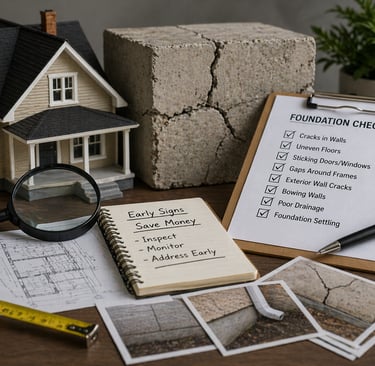
Foundation repairs can range from $3,000 to $15,000+, and most of that cost comes from problems that were visible early—but ignored.
The challenge is that foundation issues don’t start with major cracks or obvious damage. They show up as small, disconnected changes that don’t feel urgent at first.
Here’s how to spot those early signs, understand what they actually mean, and avoid turning a manageable issue into a major expense.
Early Warning Signs Most People Ignore
1. Doors That Suddenly Stick
What it is: A door that used to close smoothly but now rubs, sticks, or won’t latch properly.
Why it matters: Doors are sensitive to structural shifts. Even slight movement in your foundation can throw the frame out of alignment. If more than one door starts sticking, especially in different parts of the house, that’s a pattern—not a coincidence.
What to do: Check hinges first, but if adjustments don’t fix it, start looking for other signs nearby like cracks or gaps.
2. Windows That Feel “Tighter” Than Before
What it is: Windows becoming harder to open, close, or lock.
Why it matters: Like doors, window frames shift when the structure moves. This is often one of the first signs because windows rely on precise alignment to function properly.
What to do: Compare multiple windows. If only one is affected, it may be wear. If several are, it likely points to movement.
3. Small Gaps Above Doors or Cabinets
What it is: Thin separations where walls meet cabinets, door frames, or trim.
Why it matters: These gaps form when parts of the house move at different rates. They often appear before visible cracking, making them an early warning sign many people miss.
What to do: Take photos and monitor over time. If the gap increases, it’s not cosmetic—it’s structural movement.
4. Floors That Feel Slightly Uneven
What it is: A subtle slope or tilt you notice when walking across certain areas.
Why it matters: Uneven floors often indicate that part of the foundation has settled or shifted. This can happen slowly, so you adjust without realizing it.
What to do: Place a small ball or object on the floor. If it rolls consistently in one direction, that confirms a slope worth checking further.
5. Hairline Cracks in Drywall
What it is: Thin cracks, usually around corners, door frames, or ceiling edges.
Why it matters: Some hairline cracks are normal, especially in newer homes. The key difference is growth. If cracks widen, lengthen, or multiply, that signals movement.
What to do: Mark the ends of cracks with a pencil and date them. If they expand, you’re dealing with an active issue.
Structural Changes That Signal Movement
6. Diagonal Cracks Near Windows and Doors
What it is: Angled cracks extending from corners of openings.
Why it matters: These cracks often indicate uneven settling—one part of the foundation is moving differently than another.
What to do: Measure the width. Cracks approaching or exceeding 1/4 inch should be evaluated sooner rather than later.
7. Separation Between Walls and Ceilings
What it is: Gaps forming where vertical and horizontal surfaces meet.
Why it matters: This usually means the structure is pulling apart slightly due to shifting support below.
What to do: Look for repeating gaps in multiple rooms. One isolated gap may be cosmetic; multiple suggest a broader issue.
8. Cracks in Exterior Brick or Foundation
What it is: Visible cracks outside the home, often in a stair-step pattern.
Why it matters: Exterior cracks are often more serious because they reflect what’s happening in the structural core.
What to do: Inspect after weather changes. Expansion and contraction can make these cracks more noticeable.
9. Chimney or Porch Pulling Away From the House
What it is: A visible gap between the main structure and attached elements.
Why it matters: This indicates uneven settling between different parts of the structure. It’s rarely a cosmetic issue.
What to do: Don’t delay evaluation. These separations tend to worsen over time.
10. Nail Pops in Walls or Ceilings
What it is: Small bumps where nails push outward through drywall.
Why it matters: While occasional nail pops are normal, frequent or widespread ones can signal shifting that’s affecting internal framing.
What to do: Track where they appear. Patterns across multiple rooms matter more than isolated spots.
Moisture and Soil-Related Clues
11. Water Pooling Near the Foundation
What it is: Rainwater collecting around your home instead of draining away.
Why it matters: Water changes soil pressure. Over time, this leads to uneven support under your foundation.
What to do: Check grading and downspouts. Water should move away from the house, not toward it.
12. Soil Pulling Away From the House
What it is: Gaps forming between the ground and the foundation.
Why it matters: This happens when soil dries and contracts. It leaves parts of the foundation unsupported.
What to do: Maintain consistent moisture levels around the foundation during dry periods.
13. Persistent Dampness in Crawl Spaces
What it is: Ongoing moisture or humidity beneath the home.
Why it matters: Moisture weakens soil stability and can lead to long-term structural movement.
What to do: Improve ventilation or consider moisture barriers if the issue persists.
14. Sudden Changes After Heavy Rain or Drought
What it is: New cracks or sticking doors following weather shifts.
Why it matters: Rapid soil expansion or shrinkage stresses the foundation.
What to do: Pay attention to timing. If symptoms follow weather changes, soil conditions are likely involved.
Costly Mistakes Homeowners Make
15. Ignoring “Minor” Changes
What it is: Assuming small issues don’t matter.
Why it matters: Most major repairs start as small, manageable problems. Ignoring them allows damage to spread.
What to do: Treat patterns seriously, even if each issue seems small on its own.
16. Covering Cracks Without Checking the Cause
What it is: Patching drywall or repainting without investigation.
Why it matters: Surface fixes don’t stop structural movement. Cracks will return if the root cause isn’t addressed.
What to do: Identify the cause before repairing the surface.
17. Waiting for “Obvious” Damage
What it is: Delaying action until issues become severe.
Why it matters: By the time damage is obvious, repairs are more complex and expensive.
What to do: Act when signs first appear—not when they become unavoidable.
18. Assuming It’s Just Normal Settling
What it is: Believing all movement is harmless.
Why it matters: Initial settling is normal. Ongoing movement is not.
What to do: Compare current conditions to previous ones. Change over time is the key indicator.
19. Not Getting Multiple Opinions
What it is: Accepting the first repair recommendation.
Why it matters: Different contractors may suggest different solutions. Without comparison, you don’t know what’s reasonable.
What to do: Get at least three written assessments before deciding.
20. Overlooking Drainage Issues
What it is: Ignoring how water flows around your home.
Why it matters: Poor drainage can undo repairs and cause recurring problems.
What to do: Address water management alongside any structural fix.
21. Not Understanding Repair Options
What it is: Assuming all foundation repairs are the same.
Why it matters: Different problems require different solutions, from stabilization to pier installation. Understanding how foundation movement is evaluated and addressed in real situations can help you make better decisions:
What to do: Ask what specific problem is being solved—not just what fix is being offered.
Practical Tool: Quick Foundation Check Checklist
Use this checklist to assess your home:
Doors or windows sticking
New or growing cracks
Uneven floors
Gaps near ceilings or walls
Water pooling near foundation
Changes after weather shifts
If you check two or more, it’s worth getting a professional assessment.
FAQ
How do I know if a crack is serious?
Look for size and growth. Cracks wider than 1/4 inch or those that expand over time should be evaluated.
Is foundation repair always expensive?
Not always. Early-stage issues are usually more affordable. Costs rise as damage spreads.
Can I fix foundation issues myself?
Surface repairs are possible, but structural issues require professional evaluation to prevent further damage.
How fast do foundation problems get worse?
It depends on soil and moisture conditions, but delays generally increase both the severity and cost.
Good info, in one place—so you can move forward.
Contact
Questions? Reach out anytime.
Phone
hello@21goodinfo.com
© 2025. All rights reserved.