
21 Documents You Should Keep (And How Long to Keep Them)
Learn which important documents you should keep and how long to keep them. Stay organized, avoid legal issues, and manage your records with confidence.
2/16/20265 min read
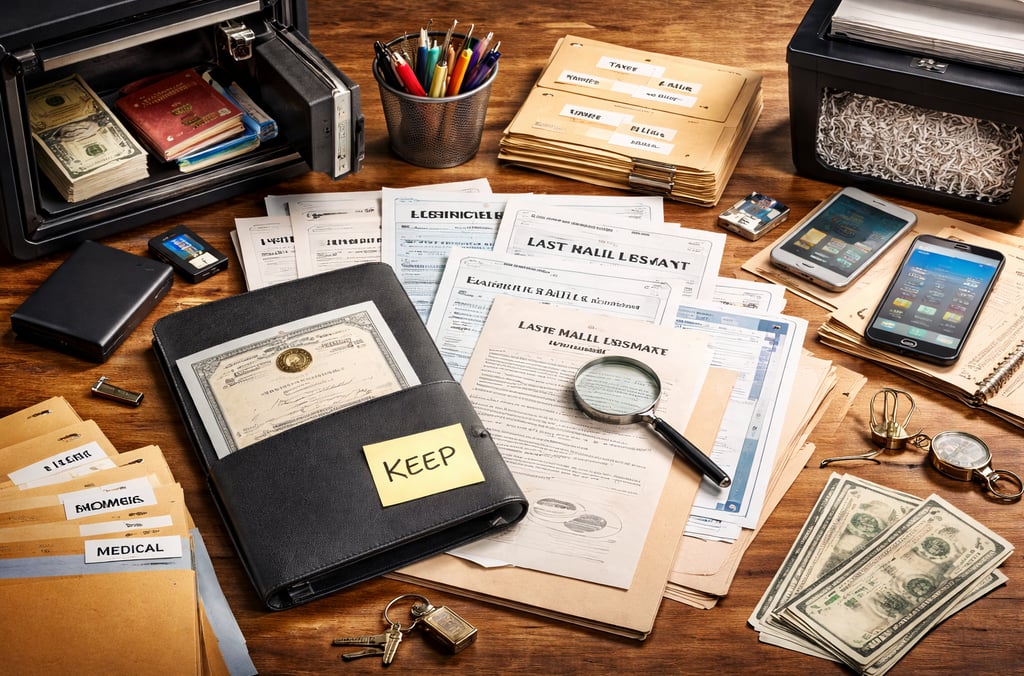
Throwing away the wrong document—or keeping the wrong ones—can cost you money, delay important processes, or create legal problems when you least expect it.
Most people either keep everything out of fear or discard records too soon without realizing their importance.
Here are 21 documents you should keep—and exactly how long to keep them so you stay organized, protected, and stress-free.
Financial Records
1. Tax Returns
What it is: Official records of your yearly income, deductions, and taxes filed with the government.
What to do:
Keep your tax returns for at least 3–7 years, depending on audit rules in your country. If you underreport income or need to amend a return, having access to past records is critical. Store both digital and printed copies in a secure place so you can retrieve them quickly when needed.
2. Pay Stubs
What it is: Detailed records of your earnings, deductions, and employer contributions.
What to do:
Keep pay stubs for at least one year or until you reconcile them with your annual tax documents. They are useful for verifying income, resolving discrepancies, or applying for loans where proof of earnings is required.
3. Bank Statements
What it is: Monthly summaries of deposits, withdrawals, and account activity.
What to do:
Keep bank statements for at least one year. For transactions related to taxes, large purchases, or disputes, retain them longer. Digital copies are usually sufficient, but make sure they are backed up securely.
4. Credit Card Statements
What it is: Records of your purchases, payments, and balances.
What to do:
Keep these for 60–90 days for general tracking, but save statements longer if they are tied to warranties, tax deductions, or disputes. Reviewing them regularly also helps you spot unauthorized charges early.
Home & Property
5. Lease Agreements
What it is: Contracts that outline your rental terms, responsibilities, and rights.
What to do:
Keep your lease agreement for at least one year after moving out. This is important in case of disputes over deposits, damages, or unpaid balances. Having a copy ensures you can refer back to agreed terms if needed.
6. Property Deeds
What it is: Legal documents that prove ownership of property or land.
What to do:
Keep these permanently. Store them in a secure, fireproof location such as a safe or safety deposit box. Losing this document can make ownership verification more complicated.
7. Home Improvement Receipts
What it is: Records of repairs, renovations, or upgrades made to your property.
What to do:
Keep these for as long as you own the home. They can help increase your property’s value during resale and may be required for tax purposes to calculate capital gains.
Insurance & Legal Documents
8. Insurance Policies
What it is: Documents outlining your coverage, limits, and terms for health, home, or auto insurance.
What to do:
Keep current policies active and retain expired ones for a few years. In case of delayed claims or disputes, having access to past coverage details can be very useful.
9. Medical Records
What it is: Documentation of your health history, treatments, and diagnoses.
What to do:
Keep medical records for several years, especially for ongoing or chronic conditions. Digital copies are recommended so you can easily share them with healthcare providers when needed.
10. Birth Certificates
What it is: Official proof of identity, age, and citizenship.
What to do:
Keep permanently in a secure and protected location. This document is often required for major life events such as school enrollment, employment, or applying for government IDs.
Everyday Records
11. Receipts for Major Purchases
What it is: Proof of purchase for expensive items like appliances or electronics.
What to do:
Keep these for as long as the item is under warranty or still in use. They are essential for returns, exchanges, or warranty claims.
12. Warranty Documents
What it is: Agreements that cover repairs or replacements for purchased products.
What to do:
Keep them until the warranty expires. Pair them with receipts for easier claims if something goes wrong.
13. Vehicle Titles
What it is: Legal proof that you own your vehicle.
What to do:
Keep permanently or until you sell the vehicle. When transferring ownership, this document is required to complete the process.
Employment & Business
14. Employment Contracts
What it is: Agreements outlining your job terms, salary, and responsibilities.
What to do:
Keep these for the duration of your employment and several years afterward. They may be needed for disputes, references, or future job applications.
15. Business Records
What it is: Documents related to business income, expenses, and operations.
What to do:
Keep for at least 5–7 years for tax compliance and audits. Organized records make reporting and financial tracking much easier.
16. Invoices & Payment Records
What it is: Proof of services provided or payments received.
What to do:
Keep these for several years, especially if you are self-employed or running a business. They support income tracking and tax filings.
Personal & Miscellaneous
17. Marriage Certificates
What it is: Legal proof of your marital status.
What to do:
Keep permanently. This document is often required for legal, financial, and administrative processes.
18. Divorce Papers
What it is: Legal documents detailing the terms of a divorce.
What to do:
Keep permanently. These may be needed for financial arrangements, custody agreements, or future legal matters.
19. School Records
What it is: Academic transcripts, diplomas, and certificates.
What to do:
Keep permanently, especially for employment or further education opportunities.
20. Loan Documents
What it is: Agreements for borrowed money, including terms and repayment schedules.
What to do:
Keep until the loan is fully paid, then retain for a few additional years in case of disputes or verification needs.
21. Utility Bills
What it is: Records of payments for services like electricity, water, and internet.
What to do:
Keep for 6–12 months unless needed for proof of address or disputes. These are useful for short-term reference but don’t need long-term storage.
Practical Tool: Simple Document Organization Checklist
☐ Scan and save digital copies of important documents
☐ Organize files into clearly labeled folders
☐ Use a secure location for physical copies
☐ Back up digital files in cloud storage
☐ Review and declutter documents once a year
Final Thoughts
Staying organized with your documents is less about keeping everything and more about keeping what truly matters. When you understand which documents are important and how long to keep them, you reduce clutter while still protecting yourself from potential issues.
Start small. Gather your most critical records and create a simple system that works for your daily life. Whether you prefer labeled folders, digital storage, or a mix of both, consistency is more important than perfection.
Over time, this habit becomes easier and more natural. Instead of scrambling to find paperwork when you need it, you’ll already have everything in place. That sense of control not only saves time but also reduces stress in situations where documentation matters most.
Good info, in one place—so you can move forward.
FAQ
Should I keep physical or digital copies?
It’s best to keep both. Digital copies are convenient, while physical copies provide a reliable backup for critical documents.
What’s the safest way to store important documents?
Use a secure, dry location for physical copies and password-protected storage for digital files. Backups are essential.
How often should I review my documents?
At least once a year. Regular reviews help you stay organized and remove unnecessary records.
Contact
Questions? Reach out anytime.
Phone
hello@21goodinfo.com
© 2025. All rights reserved.