
21 Bank Fees You Can Avoid (And the Settings That Stop Them)
Money & Consumer Smarts
6/2/20255 min read
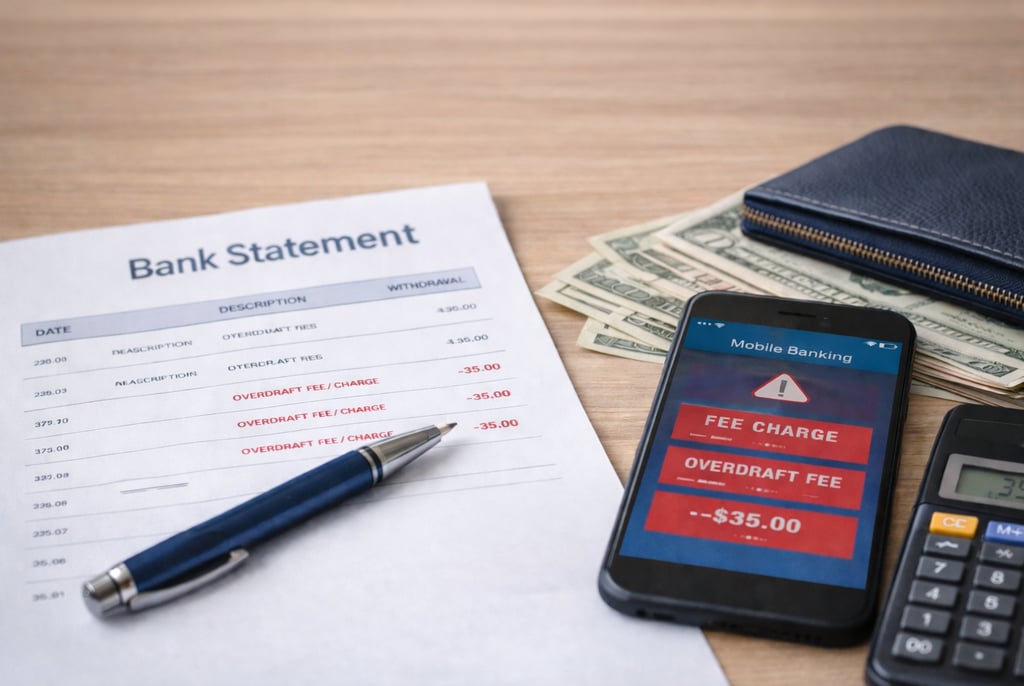
Bank fees have a way of sneaking up on people. You don’t usually agree to them intentionally, and they rarely feel obvious in the moment. Instead, they show up quietly on your statement weeks later, often labeled with vague descriptions that don’t immediately make sense.
Most people assume bank fees are unavoidable or “just part of banking.” In reality, many of the most common fees are optional, preventable, or tied to settings you didn’t realize were turned on. Banks make money from fees, but that doesn’t mean you have to accept every one of them.
This guide walks through 21 common bank fees people pay unnecessarily and explains the settings, habits, or small changes that can help you avoid them. You don’t need to change banks or overhaul your finances. In many cases, a few minutes adjusting settings can save you money every month.
Monthly & Account Maintenance Fees
1. Monthly Maintenance Fees
Many checking and savings accounts charge a monthly maintenance fee if certain conditions aren’t met. These fees often range from a few dollars to $15 or more per month.
The most common triggers include not meeting a minimum balance, not having direct deposit set up, or using the account infrequently. People often don’t realize they’re being charged because the fee quietly appears once a month.
How to avoid it:
Check your account requirements. Setting up direct deposit, maintaining a minimum balance, or switching to a no-fee account can usually eliminate this fee entirely.
2. Minimum Balance Fees
Some accounts require you to keep a minimum daily balance or average monthly balance. Falling below that amount can trigger a fee, even if it’s only for a short time.
This often happens when large bills hit or unexpected expenses come up.
How to avoid it:
If maintaining the balance feels stressful, consider switching to an account without balance requirements or setting up balance alerts.
3. Inactivity Fees
Inactivity fees apply when an account isn’t used for a certain period, often several months. These fees are more common on savings or older accounts people forget about.
They’re frustrating because they punish you for not using the account.
How to avoid it:
Schedule a small automatic transfer or log in occasionally to keep the account active.
Overdraft & Transaction Fees
4. Overdraft Fees
Overdraft fees occur when you spend more than what’s available in your account. These fees can be steep, often $30 or more per transaction.
Multiple overdrafts in a short period can add up quickly.
How to avoid it:
Turn off overdraft coverage or link your account to savings for overdraft protection. Many banks allow you to decline transactions instead of covering them with a fee.
5. Insufficient Funds (NSF) Fees
NSF fees happen when a payment is rejected due to insufficient funds. Unlike overdraft fees, the transaction doesn’t go through, but you’re still charged.
These fees often surprise people because nothing was actually paid.
How to avoid it:
Enable balance alerts and review upcoming automatic payments regularly.
6. Multiple Overdraft Fees in One Day
Some banks charge an overdraft fee for each transaction that overdrafts your account, even if they happen on the same day.
This can turn one mistake into several fees.
How to avoid it:
Ask your bank about daily overdraft limits or opt out of overdraft coverage entirely.
ATM & Cash Access Fees
7. Out-of-Network ATM Fees
Using an ATM outside your bank’s network can result in two fees: one from your bank and one from the ATM owner.
These fees are easy to overlook and can add up quickly.
How to avoid it:
Use your bank’s ATM locator app or withdraw cash in advance when possible.
8. ATM Balance Inquiry Fees
Some banks charge a fee just to check your balance at an out-of-network ATM.
It’s a small fee, but it’s entirely unnecessary.
How to avoid it:
Check balances through your bank’s app or online banking instead.
9. International ATM Fees
Using ATMs abroad often triggers international fees plus currency conversion charges.
Travelers are often surprised by how expensive small withdrawals can become.
How to avoid it:
Use banks that reimburse ATM fees or notify your bank before traveling to reduce extra charges.
Debit Card & Payment Fees
10. Debit Card Replacement Fees
Losing your debit card or needing a replacement can sometimes come with a fee, especially for expedited shipping.
How to avoid it:
Ask whether standard replacements are free and keep your card details secure.
11. Card Decline Fees
Some banks charge a fee when a transaction is declined due to insufficient funds.
This feels especially frustrating since the purchase didn’t even go through.
How to avoid it:
Keep overdraft coverage turned off and monitor balances closely.
12. Foreign Transaction Fees
Foreign transaction fees apply when purchases are processed outside your country, even for online purchases.
These fees are often around 1–3% of the transaction.
How to avoid it:
Use cards that don’t charge foreign transaction fees for international purchases.
Transfers & Payment Fees
13. Wire Transfer Fees
Wire transfers can be expensive, especially for outgoing transfers. Fees may apply to both sending and receiving funds.
Many people use wires without realizing cheaper options exist.
How to avoid it:
Use ACH transfers or peer-to-peer payment services when possible.
14. Excessive Savings Withdrawal Fees
Savings accounts often limit the number of withdrawals per month. Exceeding that limit can trigger fees.
This catches people off guard when they use savings for regular expenses.
How to avoid it:
Keep frequent transactions in checking and reserve savings for true savings.
15. Stop Payment Fees
Stopping a check or payment often comes with a fee, sometimes $30 or more.
How to avoid it:
Use electronic payments when possible and review scheduled payments carefully.
Paper & Service Fees
16. Paper Statement Fees
Many banks charge for mailed paper statements now, even if online access is available.
This fee often goes unnoticed.
How to avoid it:
Switch to electronic statements.
17. Customer Service Fees
Some banks charge fees for speaking with a representative or performing services in-branch.
How to avoid it:
Use online banking tools and ask about free service options.
18. Account Closing Fees
Closing an account shortly after opening it may trigger a fee.
This surprises people who are switching banks.
How to avoid it:
Check how long the account must remain open before closing.
Miscellaneous Fees
19. Returned Deposit Fees
If a deposited check bounces, you may be charged even though you didn’t cause the issue.
How to avoid it:
Deposit checks from trusted sources and wait for funds to fully clear.
20. Dormancy Fees
Dormancy fees apply to accounts that haven’t been used for an extended period.
They slowly drain forgotten balances.
How to avoid it:
Close unused accounts or set reminders to keep them active.
21. Account Research or Copy Fees
Requesting copies of old statements or transaction history may come with a fee.
How to avoid it:
Download and save statements regularly through online banking.
Quick Checklist: Bank Settings to Review Today
Overdraft coverage settings
Low-balance alerts
Statement delivery preferences
ATM network access
International transaction settings
Automatic transfers
Savings withdrawal limits
FAQ
Are bank fees negotiable?
Often, yes. Banks sometimes waive fees if you ask, especially if you have a good account history.
Do online banks charge fewer fees?
Many do, but it’s still important to review terms.
Is switching banks the only solution?
Not always. Adjusting settings and habits can eliminate many fees without switching.
How often should I review my bank settings?
At least once a year, or after major life changes.
Contact
Questions? Reach out anytime.
Phone
hello@21goodinfo.com
© 2025. All rights reserved.